
What Is Electrostatic Spraying, and Does It Disinfect Better Than Wiping?

By Maid Brigade of Greater Fort Worth, serving Fort Worth and the Mid-Cities since 1989. Editorial verification September 9, 2026.
Last updated: 2026-09-09
Verified against United States Environmental Protection Agency research on electrostatic sprayer evaluation and Centers for Disease Control and Prevention cleaning and disinfection guidance on September 9, 2026. Company equipment descriptions are quoted from Maid Brigade of Greater Fort Worth’s published pages as of that date and labelled as company claims. Desk verification of published sources is the method used, and no equipment testing was performed for this guide.
TL;DR: An electrostatic sprayer puts an electrical charge on disinfectant droplets so they are attracted to surfaces rather than drifting past them. EPA testing confirms the improved deposition but also found minimal wrap-around onto the far side of larger objects, and warns that the surface must stay wet for the label’s full contact time. It is a delivery method, not a substitute for cleaning first.
The physics is real, which is exactly why this gets oversold. EPA testing found little coverage on the back of larger objects, found application rates varying twenty-fold between models, from 2 to 53 ounces per 1000 square feet, and is blunt about the condition that decides everything: the surface must stay wet for the label’s full contact time.
This guide covers how the charge works, what EPA testing actually measured, the wrap-around limit, where the method earns its place in a home, and what it can never replace.
What is electrostatic spraying?
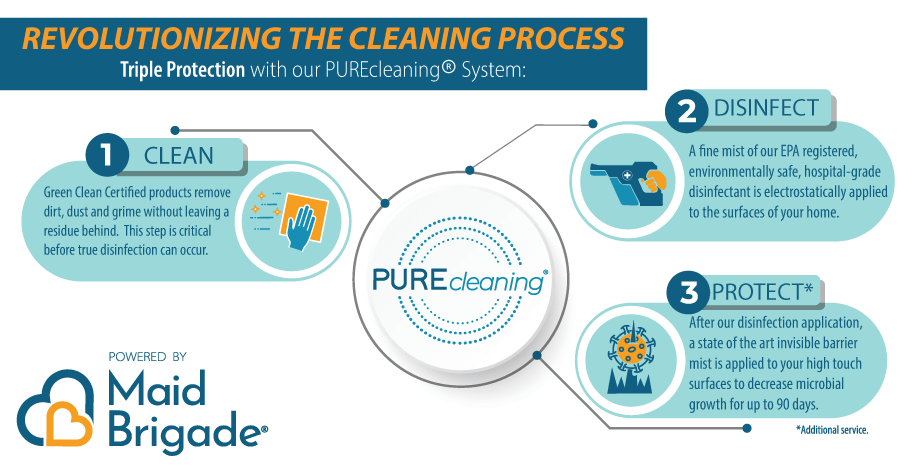
Electrostatic spraying is a method of applying disinfectant in which the droplets are given an electrical charge as they leave the nozzle. Because the charged droplets are attracted to surfaces carrying the opposite or a neutral charge, more of the spray lands on the target and less drifts into the air or onto the floor.
The EPA describes the devices as equipment that “impart an electrostatic charge to the disinfectant spray droplets (most do so as the droplets exit the nozzle of the sprayer), with the goal of improving deposition of the droplets onto surfaces”. Note the phrasing: the goal is improved deposition. It is a delivery mechanism, and it changes where liquid lands rather than what the liquid does once it arrives.
Does the charge actually improve coverage?
Yes, measurably, and EPA testing quantified the charge involved rather than leaving it as a marketing assertion. In the agency’s evaluation, the two devices using alternating current demonstrated the highest charge, “approximately -3.0 to -6.0 mC/kg”, carrying a negative polarity.
More even coverage on directly exposed surfaces is the genuine benefit, and it translates into a practical one: a crew can cover a large area quickly and consistently, without the variability that comes from how hard a given person presses a cloth. For a home with a lot of surface area, or awkward geometry like banisters and shelving units, that consistency is worth something real.
Where does electrostatic spraying fall short?
On the far side of larger objects, which is the specific claim most marketing gets wrong. The wrap-around effect is often described as though charged droplets curl around an object to coat every side. EPA testing found the opposite on a larger item: “The back side of the cylindrical trash receptacle shows little if any deposition, indicating minimal ‘wrap-around’ effect”.
Smaller-diameter objects fared better, which is consistent with the physics rather than a contradiction of it. The practical translation for a household is straightforward. Do not assume the underside of a table, the back of a toilet, or the hidden face of a cabinet handle received disinfectant because the room was sprayed. Those surfaces still need to be reached deliberately.
Does using less product make it less effective?
It can, and this is the trap that turns an efficiency gain into a quiet downgrade. The EPA is explicit about the tradeoff: “An ESS may allow less disinfectant to be used to cover a surface area, but with less disinfectant applied, disinfection efficacy may diminish if the surface does not remain wet for the required contact time”.
Manufacturer application rates in the EPA’s testing varied enormously, from 2 to 53 ounces of disinfectant per 1000 square feet across the models examined. That is more than a twenty-fold spread for the same nominal task, which tells you the method is only as good as the rate and the dwell time behind it. The agency did find that materials remained wet for ten minutes at typical deposition rates in ambient conditions, so the method can work properly. It simply is not automatic.
Does electrostatic spraying replace cleaning?
No, and this is the most consequential limitation of all. Spraying a disinfectant, however elegantly delivered, does not remove soil, grease, dust, or organic residue. The CDC requires that you “clean the surface with soap and water first”, because “impurities like dirt may make it harder for sanitizing or disinfecting chemicals to kill germs”.
A home that has been sprayed but not cleaned is a home with disinfectant sitting on top of dirt. It will not look clean, because it is not clean, and the disinfection underneath is compromised by the very soil that is still there. Any service presenting spraying as the whole visit rather than the final step is selling theatre. The distinction between the two operations is covered in can eco-friendly cleaning actually disinfect and kill germs.
When is electrostatic spraying genuinely worth it in a house?
In four situations, and naming them beats treating the method as a routine upgrade. After a household illness. In a home with an immunocompromised resident. On a move-in clean, where a family inherits a stranger’s surfaces. And in a home with large hard-surface areas and awkward geometry.
Each of those shares a feature: a lot of surface needs consistent treatment in one pass, which is precisely what even deposition buys you.
Outside those cases, the CDC’s position holds: “in most situations, cleaning regularly is enough to prevent the spread of germs”. Adding a disinfection step to every routine visit puts more chemistry into a home for little measurable gain when nobody is ill. If you are weighing it for a specific reason, request a free, no-obligation quote and describe the actual situation rather than asking for the upgrade generically.
Does it work for a home with pets or small children?
The delivery method is neutral on this question, and what matters is the liquid being delivered and the state of the surface afterwards. A charged droplet of a harsh quaternary disinfectant is still a harsh quaternary disinfectant. A charged droplet of hypochlorous acid at working concentration is still largely water once it has done its job, and the peer-reviewed hospital trial that measured that chemistry used it at 150 parts per million against 500 for bleach.
The practical rules are the same as for any disinfection: keep pets and children off treated surfaces until they are dry, ventilate where possible, and be clear with the company about which surfaces are treated. Households weighing chemistry specifically will find the detail in is electrolyzed water cleaning safe for kids and pets and which house cleaning products are actually pet-safe.
What does Maid Brigade of Greater Fort Worth do differently?
Maid Brigade of Greater Fort Worth states that it applies its cleaning agents using Electrostatic PUREmist sprayers, delivering the electrolyzed water it generates on site from salt, water, and electricity. That is the company’s own published description, reproduced here as a company claim rather than an independent finding.
The sequencing is what makes the equipment meaningful rather than decorative. Spraying is the finishing step after surfaces have been cleaned, not the visit itself, and crews work a multi-fiber cloth system intended to prevent cross-contamination between rooms. Because hypochlorous acid loses potency in storage, the company also states that it makes its products in-house and refreshes them daily. If disinfection coverage is your reason for hiring, book a visit and ask which surfaces are sprayed, which are hand-wiped, and how long the disinfectant is left in place.
How do Fort Worth homeowners actually decide?
Most households never need to evaluate spraying equipment, and treating it as a headline feature is usually a sign that something more basic is being glossed over. Reliability, scope, crew consistency, and trust decide satisfaction far more often than application technology does.
Where it does matter, three questions settle it. Which surfaces are sprayed and which are still hand-wiped, given that the far side of larger objects receives little deposition? What is the contact time, and does the surface stay visibly wet for it? And was the surface cleaned before it was sprayed? A company that answers in surfaces and durations is running the method properly. A company that answers with the word electrostatic is selling the nozzle. For the full pre-hire checklist, see what to ask before hiring a house cleaning company in Fort Worth.
Key Takeaways
- Electrostatic spraying charges disinfectant droplets so they are attracted to surfaces, improving deposition on directly exposed faces.
- EPA testing measured the highest-charge devices at approximately -3.0 to -6.0 millicoulombs per kilogram, confirming the mechanism is real.
- The same testing found little or no deposition on the back of a larger cylindrical object, so wrap-around coverage should not be assumed.
- Manufacturer application rates ranged from 2 to 53 ounces per 1000 square feet, and using less product can reduce efficacy if the surface does not stay wet for the label’s contact time.
- Spraying does not remove soil, and the CDC requires surfaces to be cleaned before disinfecting, so a sprayed but uncleaned home is neither clean nor properly disinfected.
- The method earns its place after a household illness, in immunocompromised homes, on move-in cleans, and in homes with large or awkward hard-surface areas.
FAQ
Does electrostatic spraying coat all sides of an object?
Not reliably on larger objects. EPA testing on a cylindrical trash receptacle found little if any deposition on the back side, indicating minimal wrap-around effect, though smaller-diameter objects showed better side coverage. The practical consequence is that undersides, backs of fixtures, and hidden faces still need to be reached deliberately by hand. Treat wrap-around claims about large items with skepticism.
Is electrostatic spraying better than wiping?
They do different jobs, so the comparison is misleading. Wiping physically removes soil, which is the cleaning step. Spraying distributes disinfectant, which is the disinfection step, and it can do so more evenly and quickly across a large area. The CDC requires cleaning before disinfecting, so a proper visit uses both: wipe to clean, then spray to disinfect, with the surface staying wet for the label’s contact time.
Does spraying disinfectant sanitize the air?
No, and this is a claim to be wary of. Electrostatic sprayers are designed to deposit droplets onto surfaces rather than to treat air, and the EPA describes their purpose as improving deposition onto surfaces. Air quality is a separate problem addressed by ventilation and filtration rather than by surface disinfection. Any claim that spraying purifies the air in a home should be treated as unsupported.
How long should a sprayed surface stay wet?
For the contact time printed on the disinfectant’s label, which varies by product. The EPA is explicit that the surface must remain wet for the required contact time, and found that materials remained wet for ten minutes at typical deposition rates in ambient conditions. The efficiency of using less product is precisely where this can go wrong, so ask what the dwell time is and whether the application rate is set to achieve it.
Do I need to leave the house while surfaces are sprayed?
That depends on the product, the ventilation, and who lives there, so ask the company directly rather than assuming. As a general practice, keeping children and pets off treated surfaces until they are dry is sensible regardless of the chemistry, and households with asthma or chemical sensitivity often prefer to be out during and shortly after any disinfection step. Anyone managing a diagnosed respiratory condition should discuss specifics with their clinician.
Is this worth paying extra for?
Only when you have a specific reason: recent illness in the house, an immunocompromised resident, a move-in clean, or a large hard-surface home where hand-wiping every face is impractical. For routine maintenance in a healthy household, the CDC’s position is that regular cleaning is generally enough. Paying for a disinfection step on every visit is usually buying reassurance rather than a measurable health outcome.
Bottom Line
Electrostatic spraying is a genuine improvement in how disinfectant gets onto surfaces, confirmed by EPA measurement, and it is routinely oversold on the one point the same testing contradicts: it does not reliably wrap around larger objects. It also cannot substitute for cleaning, and using less product to gain efficiency can quietly cost you the disinfection itself. Ask which surfaces are sprayed, how long they stay wet, and whether they were cleaned first. To get that answered for your home, contact the office.
Sources
- What is PUREcleaning and how does Maid Brigade make its cleaning agents on site for the liquid these sprayers deliver.
- What does hospital grade disinfectant actually mean for a house cleaning for what the disinfectant claim itself means.
- Can eco-friendly cleaning actually disinfect and kill germs for the cleaning versus disinfecting distinction.
- Is electrolyzed water cleaning safe for kids and pets for household safety around treated surfaces.
- Which house cleaning products are actually pet-safe for what the delivered liquid should and should not contain.
- What to ask before hiring a house cleaning company in Fort Worth for the full pre-hire checklist.
- United States Environmental Protection Agency, evaluating electrostatic sprayers for disinfectant application: droplet charge measurements, the wrap-around finding, application rate ranges, and the contact-time requirement.
- Centers for Disease Control and Prevention, when and how to clean and disinfect: cleaning before disinfecting, and when routine cleaning is sufficient.
- EWASH trial, National Library of Medicine: the working concentrations of hypochlorous acid and sodium hypochlorite compared in a double-blind hospital trial.