
Is Electrolyzed Water Cleaning Safe for Kids and Pets?

By Maid Brigade of Greater Fort Worth, serving Fort Worth and the Mid-Cities since 1989. Editorial verification September 10, 2026.
Last updated: 2026-09-10
Verified against peer-reviewed research indexed in the National Library of Medicine and the Food and Drug Administration on September 10, 2026. Every external link in this guide was checked live during that review and the cited pages re-read where they permit automated access; dead citations found in that sweep were replaced or removed. Desk verification of published sources is the method used, and no laboratory or in-home testing was performed for this guide.
TL;DR: Electrolyzed water cleaning uses hypochlorous acid, a compound the human body’s own white blood cells produce to fight infection, made on-site from just salt, water, and electricity. It is not the same chemical as bleach, and hypochlorous acid is widely used in over-the-counter wound and skin care products for both people and animals. Maid Brigade of Greater Fort Worth describes itself as the only cleaning service in its market using this method, applied with Electrostatic PUREmist sprayers.
Parents and pet owners asking whether a cleaning method is “safe” are usually really asking one thing: what is actually in it, and is that the same as a harsh household chemical with a friendlier name. Electrolyzed water has a specific, checkable answer, because the active ingredient is not a trade secret. It is hypochlorous acid, and its safety profile is well documented outside of any single cleaning company’s marketing.
What is electrolyzed water cleaning, and what is actually in it?
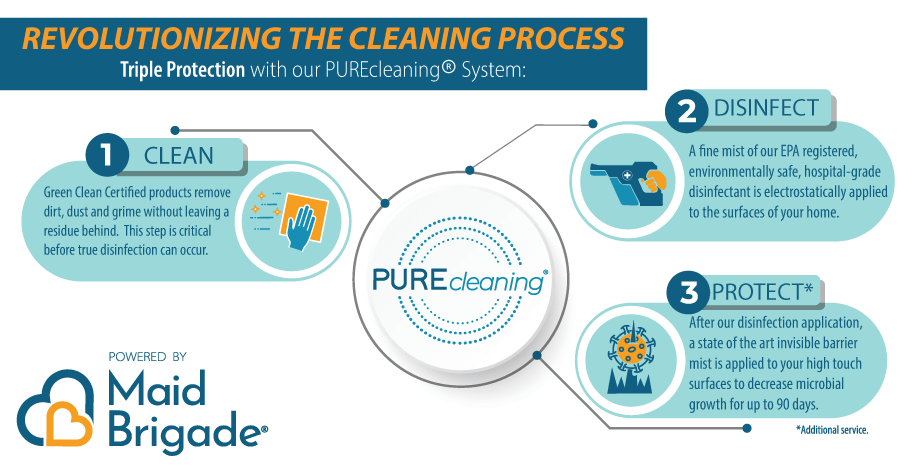
Electrolyzed water is made by running an electrical current through a solution of ordinary salt and water, which splits it into two active cleaning agents: hypochlorous acid, used for light cleaning and disinfection, and sodium hydroxide, used for general-purpose cleaning. Maid Brigade of Greater Fort Worth describes itself as “the only cleaning service using Electrolyzed Water or E-water” in its market, using it as a multi-surface cleaner delivered through Electrostatic PUREmist sprayers, and refers to the solution internally as “Magic Water” because it leaves no residue behind as it breaks down dirt and residue into microscopic particles.
Is hypochlorous acid the same thing as bleach?
No, and this is the single most important distinction for anyone worried about harsh chemicals. Bleach is sodium hypochlorite, a different compound with a different safety profile, while hypochlorous acid (HOCl) is the molecule the body’s own white blood cells naturally produce as part of its immune response to kill bacteria and viruses. A peer-reviewed study published via the National Institutes of Health found that electrolyzed hypochlorous acid water “exhibits potent disinfectant activity against various viruses through irreversible protein aggregation,” describing the mechanism at the molecular level rather than a marketing claim.
Is hypochlorous acid safe to use around children?
Hypochlorous acid’s safety profile comes from a source most cleaning chemicals cannot claim: it already exists naturally in the human body. Because HOCl is the same antimicrobial compound produced by white blood cells during a normal immune response, it does not carry the same toxicity profile as synthetic disinfectants formulated from unrelated industrial chemicals. That distinction is not just theoretical for a home with kids: a Canadian birth cohort study of 2,022 children published in CMAJ found that by age 3, children in homes with high-frequency use of standard cleaning products had an asthma diagnosis rate of 7.9 percent, compared to 4.8 percent in homes with low-frequency use, an adjusted 37 percent higher odds of developing asthma. That is also why HOCl-based solutions are used in settings with vulnerable populations, including hospitals, schools, and daycares, where tolerance for harsh chemical residue is lowest.
Is hypochlorous acid safe around dogs and cats?
Yes, and this is backed by its use in veterinary medicine itself, not just cleaning products. Hypochlorous acid formulations are sold as over-the-counter veterinary wound and skin care products under names like Vetericyn, marketed for direct use on cats and dogs, including around eyes, ears, and paws. Dr. Andrew Jones, a veterinarian writing on Veterinary Secrets, describes HOCl as “one of the few products that’s non-toxic, non-irritating, and has virtually no side effects,” and notes it remains safe for dogs and cats even if licked. If a compound is trusted for direct application to an animal’s skin and eyes in veterinary care, that is a meaningfully higher bar than what most household cleaning products are ever tested against.
Why does Maid Brigade use electrolyzed water instead of standard chemical cleaners?
Maid Brigade of Greater Fort Worth was, according to its own description, “the first maid service in the United States to make the switch to entirely sustainable, responsible Green cleaning products,” and electrolyzed water is the centerpiece of that approach. The company’s own site describes the solution as an “all-natural, hospital grade disinfectant” it uses to disinfect surfaces throughout a home. Because the solution is generated on-site from salt, water, and electricity rather than shipped in as a manufactured chemical, it also avoids one of the more common complaints about standard cleaners: strong artificial fragrance and harsh fumes left behind after a visit.
Does electrolyzed water actually disinfect as well as traditional cleaning chemicals?
Independent research on the mechanism supports that it does. The same peer-reviewed analysis found that electrolyzed hypochlorous acid water works through “irreversible protein aggregation,” a way of describing that it physically breaks down the structure pathogens need to survive, rather than simply masking odor or wiping away visible dirt. A hospital-based study published in Antimicrobial Stewardship & Healthcare Epidemiology found that ionless hypochlorous acid water atomized at 40 ppm produced a 5.1 to 5.4 log reduction in Staphylococcus aureus within 5 hours, a real hospital-environment disinfection result rather than a lab claim alone. That is consistent with why hypochlorous acid solutions are used well beyond home cleaning: the FDA has approved hypochlorous acid for direct use as an antimicrobial in food-processing water, at concentrations up to 60 ppm, for washing meat, poultry, fish, seafood, fruits, vegetables, and shell eggs, and it is also used in wound care settings where visible cleanliness is not enough and actual disinfection has to be demonstrable.
How that liquid is applied matters as much as what it is, and the evidence on charged-droplet delivery is covered in what is electrostatic spraying and does it disinfect better than wiping.
If you would rather see the process explained in person, book a visit.

What should a homeowner ask before trusting any “green” or “natural” cleaning claim?
Ask what the active ingredient actually is, not just what the marketing calls it. A closer look at that exact question is covered in can eco-friendly cleaning actually disinfect and kill germs, and the broader question of whether house cleaning actually improves indoor air quality beyond just looking clean. For households managing allergies, asthma, or sensitive skin specifically, house cleaning for allergy and asthma sufferers in Fort Worth covers what actually helps and what does not. None of this is medical or veterinary advice: a specific concern about a child’s asthma or a pet’s skin condition belongs with a pediatrician or veterinarian, not a cleaning company. To ask about the exact products and process used in a specific home, request a free, no-obligation quote and put the question directly to the team.
To ask exactly what would be used on the floors a baby crawls on, request a free, no-obligation quote.
Key Takeaways
- Electrolyzed water cleaning is made on-site from just salt, water, and electricity, producing hypochlorous acid and sodium hydroxide as the active cleaning and disinfecting agents.
- Hypochlorous acid is not bleach; bleach is sodium hypochlorite, a different compound, while HOCl is the same molecule the body’s own white blood cells produce to fight infection.
- Hypochlorous acid products are sold as over-the-counter veterinary wound and skin care products for direct use on animals, including around eyes, ears, and paws.
- A peer-reviewed study found electrolyzed hypochlorous acid water disinfects through irreversible protein aggregation, a real mechanism rather than a marketing description.
- A hospital study found hypochlorous acid water atomized at 40 ppm produced a 5.1 to 5.4 log reduction in Staphylococcus aureus within 5 hours, and the FDA has approved hypochlorous acid for direct food-safety use at up to 60 ppm.
- A Canadian birth cohort study of 2,022 children found that high-frequency use of standard cleaning products in infancy was linked to a 7.9 percent asthma rate by age 3, compared to 4.8 percent in low-use homes.
- Maid Brigade of Greater Fort Worth describes itself as the only cleaning service in its market using electrolyzed water, applied through Electrostatic PUREmist sprayers.
FAQ
Is electrolyzed water cleaning safe for kids?
Yes. The active ingredient, hypochlorous acid, is the same compound the human body’s own immune cells produce to fight infection, and it is used in settings with vulnerable populations such as hospitals, schools, and daycares specifically because of its favorable safety profile compared to synthetic disinfectants.
Is electrolyzed water the same as bleach?
No. Bleach is sodium hypochlorite, a different chemical compound. Electrolyzed water’s active disinfecting ingredient is hypochlorous acid (HOCl), which the body naturally produces and which has a different, generally milder safety and irritation profile than bleach.
Is hypochlorous acid safe for dogs and cats?
Yes. Hypochlorous acid is sold as an over-the-counter veterinary wound and skin care product applied directly to cats and dogs, including sensitive areas like eyes, ears, and paws. Veterinarian Dr. Andrew Jones describes it as non-toxic and non-irritating with virtually no side effects.
What makes electrolyzed water different from a typical “green” cleaning product?
Most cleaning products, including many labeled green or eco-friendly, are still manufactured chemical formulas shipped in from elsewhere. Electrolyzed water is generated on-site from salt, water, and electricity, so the active ingredients are hypochlorous acid and sodium hydroxide rather than a proprietary blend, which is why the exact mechanism can be independently verified rather than taken on faith.
Sources
- Can eco-friendly cleaning actually disinfect and kill germs? The honest answer
- Does house cleaning improve indoor air quality in Fort Worth homes?
- House cleaning for allergy and asthma sufferers in Fort Worth
- Maid Brigade of Greater Fort Worth: About Us
- NIH/PMC: Electrolyzed hypochlorous acid water exhibits potent disinfectant activity against various viruses through irreversible protein aggregation
- Veterinary Secrets: Dr. Andrew Jones on HOCl spray safety for dogs and cats
- Antimicrobial Stewardship & Healthcare Epidemiology: Microbiological analysis of atomized ionless hypochlorous acid water in a hospital environment
- FDA: Environmental Decision Memo, Food Contact Notification No. 1811 (hypochlorous acid, up to 60 ppm)
- CMAJ: Association of use of cleaning products with respiratory health in a Canadian birth cohort