
What Is Electrolyzed Water Cleaning, and How Does It Actually Work?

By Maid Brigade of Greater Fort Worth, serving Fort Worth and the Mid-Cities since 1989. Editorial verification September 9, 2026.
Last updated: 2026-09-09
Verified against the peer-reviewed EWASH hospital trial published in the National Library of Medicine, Centers for Disease Control and Prevention cleaning and disinfection guidance, and the United States Geological Survey water hardness scale on September 9, 2026. Maid Brigade product and process details reflect the company’s published descriptions as of that date. Desk verification of published sources is the method used, and no laboratory or in-home testing was performed for this guide.
TL;DR: Electrolyzed water is ordinary salt water run through an electric current, which splits it into hypochlorous acid, which disinfects, and sodium hydroxide, which lifts grease. It is the same chlorine family as bleach at roughly a third of the concentration, and a peer-reviewed hospital trial measured 84.8 percent microbiological cleanliness for hypochlorous acid against 87.3 percent for bleach. Maid Brigade of Greater Fort Worth makes its own on site through PUREcleaning.
You have read “we clean with electrolyzed water” and filed it under marketing. Fair. It sounds like a euphemism for tap water, it costs a company nothing to claim, and if you have a toddler who mouths the coffee table you need a mechanism, not a mood. The chemistry is real: a double-blind hospital trial put hypochlorous acid at 84.8 percent microbiological cleanliness against 87.3 percent for bleach.
This guide covers what the liquid actually is, why the chemistry works, what the research supports, the three places it genuinely falls short, and the four questions that separate a real system from a label.
What is electrolyzed water cleaning?
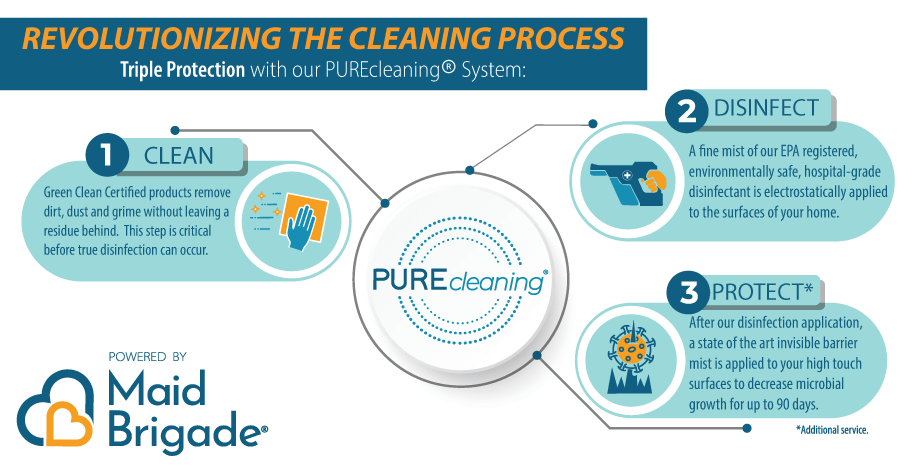
Electrolyzed water is a cleaning and disinfecting solution made by passing an electric current through ordinary salt and water. The current splits the solution into two streams with two different jobs: an acidic one containing hypochlorous acid, which kills bacteria and viruses, and an alkaline one containing sodium hydroxide, which loosens grease and oily films.
The structural point most descriptions miss is that this is two products, not one. A crew using electrolyzed water is carrying a general-purpose cleaner and a disinfectant that happened to come out of the same machine from the same starting ingredients. Nothing is diluted from a concentrate shipped across the country in a plastic jug, which is why these systems are installed at a company’s own facility rather than sold by the bottle.
Why does running electricity through salt water make a disinfectant?
Because electrolysis rearranges what is already in the solution rather than adding anything new. Salt in water separates into sodium and chloride. An electric current pulls those toward opposite electrodes. Chloride reacting at the positive electrode produces hypochlorous acid. Sodium reacting at the negative electrode produces sodium hydroxide.
Hypochlorous acid is not an exotic industrial chemical. It is the compound your own white blood cells generate to kill invading bacteria, which is part of why it works at low concentrations and is comparatively gentle on tissue. Chlorine bleach uses closely related chemistry, but bleach is sodium hypochlorite, a harsher form of the same chlorine family. The practical difference is concentration and pH. In the hospital trial, hypochlorous acid was used at 0.015 percent, roughly 150 parts per million, against bleach at 0.05 percent, or 500 parts per million.
What does the research actually say about how well it works?
The strongest available evidence puts electrolyzed water in the same effectiveness band as diluted bleach for routine surface disinfection, rather than above it. That is a more useful claim than the marketing version, because it is checkable, and because it sets an expectation a homeowner can actually hold a company to after the first visit.
The trial ran double-blind across six wards in two hospitals in 2021 and concluded, in the researchers’ own words, that “HOCl and sodium hypochlorite have a similar efficacy in achieving microbiological cleanliness, with HOCl acting at a lower concentration”. The work was led by Giorgia Gon of the London School of Hygiene and Tropical Medicine, with hospital hygiene researcher Stephanie J. Dancer of NHS Lanarkshire and Edinburgh Napier University among the authors. Electrolyzed water is not a miracle that beats everything else. It matches a standard disinfectant while putting roughly a third of the chlorine into your house, and for most households that tradeoff is the entire point.
Does electrolyzed water clean, or does it only disinfect?
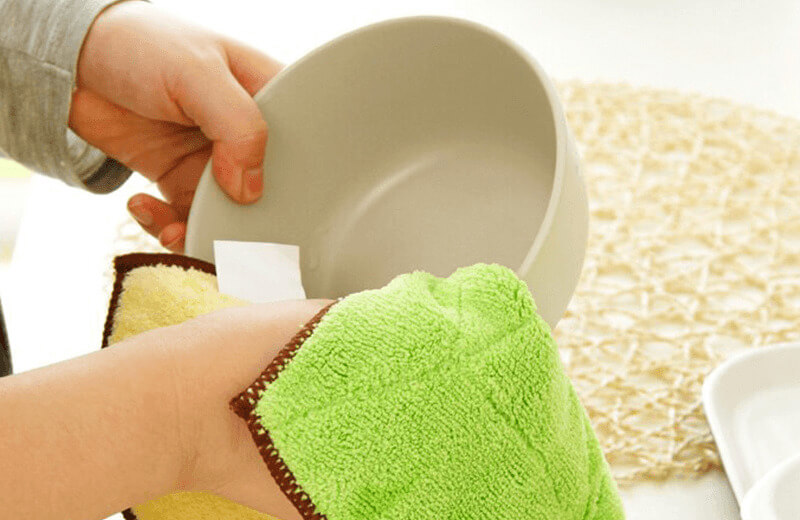
It does both, but not with the same liquid, and this is where most homeowners get confused. The alkaline stream is the cleaner and breaks down oils so soil lifts off. The acidic stream is the disinfectant, and it works properly only on a surface that has already been cleaned.
That order is a requirement, not a preference. The Centers for Disease Control and Prevention is explicit that you should “clean the surface with soap and water first”, because “impurities like dirt may make it harder for sanitizing or disinfecting chemicals to kill germs”. Any company telling you one spray both cleans and disinfects in a single pass is describing something that does not match how infection control works.
Does electrolyzed water work on kitchen counters and eating surfaces?
Yes, and the kitchen is where low residue matters most. Granite, quartz, sealed stone, laminate, and stainless steel all tolerate the alkaline cleaner, and the hypochlorous acid handles disinfection on the high-touch zones: the counter where raw chicken was trimmed, the refrigerator handle, the faucet lever, the cabinet pull beside the trash.
Households care about chemistry in this specific room because it is where food meets surfaces and where small children put their hands and then their mouths. A conventional quaternary disinfectant leaves a film that is designed to stay there. Hypochlorous acid at working concentration does not. The room-by-room scope of what actually gets treated on a full reset is laid out on the Fort Worth deep cleaning service page, and a free, no-obligation quote is where you confirm what would be used in your own kitchen.
Is it strong enough for bathrooms and toilets?
For routine disinfection of bathroom surfaces, yes, provided the surface is cleaned first and the disinfectant stays wet long enough to work. Toilets, handles, light switches, and faucet sets are exactly the high-touch surfaces the CDC flags for the clean-then-disinfect sequence.
There is one honest limitation. Hypochlorous acid is a disinfectant, not a descaler. It does not dissolve the chalky crust on Fort Worth shower doors, because that deposit is calcium carbonate and needs an acid descaler or physical removal. Separate problem, separate fix, covered in the guide to hard water and mineral buildup in Fort Worth homes.
Is electrolyzed water safe around pets and children?
The safety case rests on concentration and on what is left behind, and it is genuinely better than most conventional alternatives on both. At working strength the solution is largely water plus a small amount of an active that breaks down, which is why households with crawling infants and floor-licking dogs ask for it by name.
What it does not do is make a medical claim. No cleaning product treats or prevents disease in a person. Anyone managing asthma, chemical sensitivity, or a compromised immune system should decide with their clinician what belongs in their home rather than with a cleaning company’s brochure. The full treatment is in is electrolyzed water cleaning safe for kids and pets.
Why does electrolyzed water have to be made fresh?
Because it does not keep. Hypochlorous acid is unstable and loses potency with exposure to light, air, and heat. A solution that sat in a warehouse for six months is not the liquid it was on the day it was made, which is precisely why generation equipment lives where the crews load up.
This is the single most useful question to ask any company advertising electrolyzed water. If the answer is that it arrives pre-bottled from a supplier, you are being sold something other than what an on-site system produces. If the answer is that it is made on site and replaced on a set schedule, the claim has mechanics behind it.
What does Maid Brigade of Greater Fort Worth do differently?
Maid Brigade of Greater Fort Worth runs electrolyzed water as its routine cleaning chemistry rather than as an upsell, through the system it calls PUREcleaning. The company states that its agents are made “using salt, water, and electricity”, that it makes its products in-house and refreshes them daily, and that its cleaning agents are free from harsh odors.
The generated agents split the same two ways described above: hypochlorous acid for light cleaning and disinfection, sodium hydroxide for general-purpose cleaning. The company describes that electrolyzed water as a hospital grade disinfectant and calls the multi-surface cleaner Magic Water.
Two supporting details matter as much as the chemistry. Crews arrive fully equipped, so the household buys and stores nothing, and they work a multi-fiber cloth system intended to prevent cross-contamination between rooms, which is what stops a bathroom cloth ever reaching a kitchen counter. The company also describes itself as the first maid service in the United States to switch entirely to green cleaning products, which is the brand’s own account of its history rather than an independently audited certification. To ask what would actually be used in your home, book a visit or start with a quote.
How do Fort Worth homeowners actually decide?
Most people do not choose a cleaning service on chemistry. They choose on trust, schedule, and price, and chemistry becomes the tiebreaker once someone in the house has a reason to care. That reason is usually a specific person: an infant, an elderly parent, a dog that grooms itself off the floor, a partner who gets a headache from scented cleaners.
Four questions separate a real system from a label. Is the solution generated on site or delivered pre-bottled? How often is it replaced? Which product cleans and which disinfects, and in what order? Does the disinfectant stay wet long enough to work? A company running the real thing answers all four without hesitating. For the wider version of that interrogation, how to vet a green cleaning company and avoid greenwashing in the Mid-Cities covers the claims that collapse under a follow-up question, and what to ask before hiring a house cleaning company in Fort Worth covers everything else worth asking before anyone gets a key.
Key Takeaways
- Electrolyzed water is salt and water split by an electric current into hypochlorous acid, which disinfects, and sodium hydroxide, which cleans.
- A peer-reviewed hospital trial found hypochlorous acid reached 84.8 percent microbiological cleanliness against 87.3 percent for bleach, at roughly a third of the chlorine concentration.
- Cleaning and disinfecting are two separate steps, and the CDC is explicit that a surface must be cleaned before a disinfectant can work properly.
- Hypochlorous acid disinfects but does not dissolve hard water scale, which is a mineral deposit needing a descaler rather than a disinfectant.
- The solution is unstable and loses potency over time, so the only meaningful version of the claim is one where the liquid is generated on site and refreshed regularly.
- Maid Brigade of Greater Fort Worth generates its own through PUREcleaning and describes refreshing it daily, which is the specific detail worth confirming with any company making this claim.
FAQ
Is electrolyzed water just salt water?
No. It starts as salt water, but passing an electric current through it changes the chemistry rather than simply mixing it. The current drives chloride and sodium to opposite electrodes, producing hypochlorous acid on one side and sodium hydroxide on the other. Those two liquids are chemically distinct from the salt solution they came from, and each does a different job. Plain salt water sprayed on a counter does not disinfect anything.
Is electrolyzed water as effective as bleach?
For routine surface disinfection, the peer-reviewed evidence puts it in the same band rather than above or below it. A double-blind cluster-randomized trial across six hospital wards compared hypochlorous acid at 150 parts per million against sodium hypochlorite at 500 parts per million and found microbiological cleanliness of 84.8 percent versus 87.3 percent, a difference that was not statistically significant. The practical advantage is comparable results with substantially less chlorine in the home.
Does electrolyzed water leave a residue?
Far less than most conventional disinfectants, because the active ingredient breaks down rather than persisting as a film. Many quaternary ammonium disinfectants are designed to leave a residual layer, which is useful in some settings and unwelcome on a kitchen counter or a floor where a baby crawls. Hypochlorous acid at working concentration is largely water once it has done its job, which is the main reason households with young children and pets ask for it.
Can electrolyzed water remove hard water stains in my shower?
No, and this is a common misunderstanding. Hard water stains are calcium and magnesium deposits left as water evaporates, and removing them takes an acidic descaler or mechanical removal. A disinfectant addresses microorganisms, not mineral chemistry. Fort Worth water runs 8 to 10 grains per gallon, so this is a persistent local problem no disinfectant will solve on its own.
How do I know a company really uses electrolyzed water?
Ask where it is made and how often it is replaced. Because hypochlorous acid degrades with time, light, and heat, a genuine system generates the solution on site and cycles it on a schedule rather than storing it for months. Ask which liquid is the cleaner and which is the disinfectant, and in what order they are applied. A company running the real system answers those questions specifically. A company using the phrase as marketing usually cannot.
Is electrolyzed water approved for use in food preparation areas?
Hypochlorous acid chemistry is widely used in food processing and produce washing, which is part of why it appeals to households worried about kitchen surfaces. Regulatory approval attaches to specific registered products and specific uses rather than to a category, so the accurate question to put to a cleaning company is which product it applies in a kitchen and what that label says about food-contact surfaces. Treat any blanket claim of approval without a named product as unverified.
Bottom Line
Electrolyzed water is a real mechanism with real evidence behind it, and it is neither magic nor marketing. It matches diluted bleach for routine disinfection while putting roughly a third of the chlorine into the house, it cannot descale a shower, and it only means something when the solution is generated on site and replaced often. Ask the four questions above of any company that advertises it. If you want a straight answer about what would be used in your own home, request a free, no-obligation quote and ask them directly.
Sources
- Is electrolyzed water cleaning safe for kids and pets for the safety question in full.
- What is PUREcleaning and how does Maid Brigade make its cleaning agents on site for how the generation system works in practice.
- What does hospital grade disinfectant actually mean for a house cleaning for what the term does and does not promise.
- How to vet a green cleaning company and avoid greenwashing in the Mid-Cities for the claims that collapse under a follow-up question.
- Hard water and mineral buildup in Fort Worth homes for why a disinfectant will not touch shower scale.
- What to ask before hiring a house cleaning company in Fort Worth for the wider vetting checklist.
- EWASH trial, National Library of Medicine: the double-blind hospital comparison of hypochlorous acid against sodium hypochlorite, including the 84.8 and 87.3 percent cleanliness figures and the concentrations used.
- Centers for Disease Control and Prevention, when and how to clean and disinfect: the definitions of cleaning, sanitizing, and disinfecting, and the requirement to clean before disinfecting.
- United States Geological Survey, hardness of water: the hardness classification bands referenced in the shower scale answer.