
Hard Water and Mineral Buildup in Fort Worth Homes: What Cleaning Can and Cannot Fix
By Maid Brigade of Greater Fort Worth, serving Fort Worth and the Mid-Cities since 1989. Editorial verification September 9, 2026.
Last updated: 2026-09-09
Verified against the City of Fort Worth 2022 Water Quality Report, the United States Geological Survey hardness of water classification, and United States Environmental Protection Agency mold and moisture guidance on September 9, 2026. Figures quoted are the city’s own published values for its treated supply. Desk verification of published sources is the method used, and no water testing was performed for this guide.
TL;DR: Fort Worth’s treated water measures 138 to 178 parts per million total hardness, or 8 to 10 grains per gallon, which lands in the hard band on the USGS scale. That mineral load is why shower glass clouds, faucets spot, and soap scum returns days after cleaning. Regular cleaning manages it, descaling removes existing deposits, and only a softener changes the cause.
Three complaints turn up constantly in Mid-Cities homes and they all have the same root. The shower glass looks foggy no matter how often it is cleaned. Chrome faucets spot within hours of drying. And a white crust builds around aerators and shower heads that no general-purpose cleaner touches. The City of Fort Worth publishes the reason in its own water quality reporting: total hardness of 138 to 178 parts per million, or 8 to 10 grains per gallon.
This guide covers what those numbers mean, why hard water defeats ordinary cleaning, which surfaces suffer most, what descaling actually does, and where the honest limit of any cleaning service sits.
Is Fort Worth water hard?
Yes, officially and measurably. The United States Geological Survey classifies water as soft at 0 to 60 milligrams per liter of calcium carbonate, moderately hard at 61 to 120, hard at 121 to 180, and very hard above 180. Fort Worth’s published range of 138 to 178 parts per million sits squarely inside the hard band, near its upper end.
The city’s own 2022 reporting also lists total dissolved solids at 192 to 266 parts per million and total alkalinity at 128 to 150. The variation across that range reflects which lakes and treatment plants are supplying a given neighborhood at a given time, which is why two Mid-Cities households can have noticeably different experiences of the same city supply.
Why does hard water defeat ordinary cleaning?
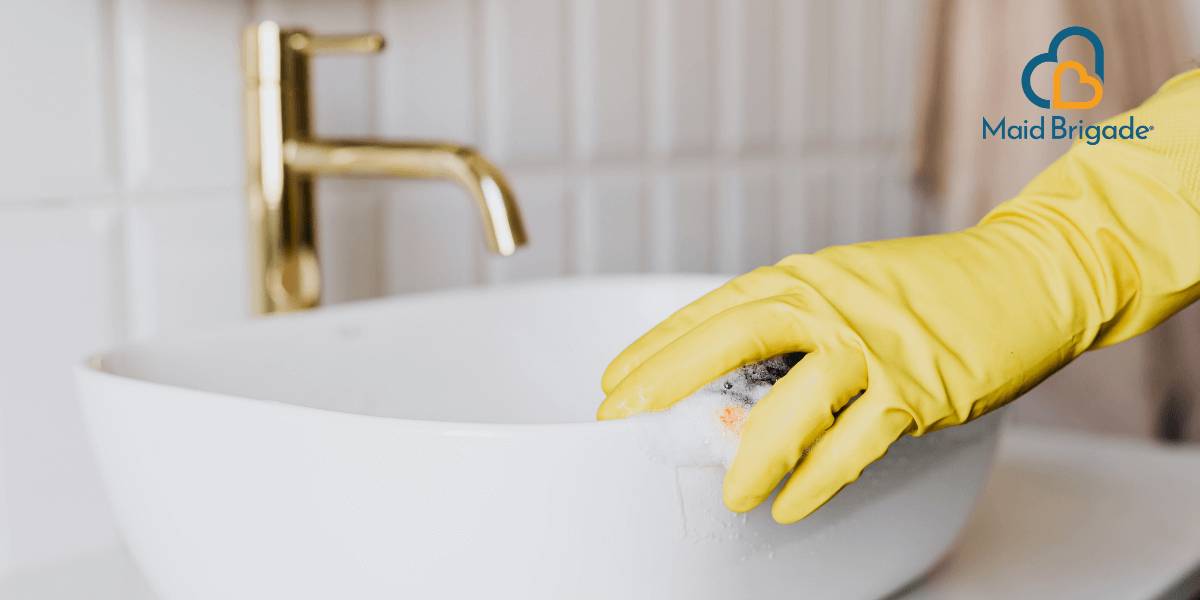
Because the residue is a mineral deposit rather than soil, and cleaning products are formulated to lift soil. When hard water evaporates, the dissolved calcium and magnesium stay behind as solid scale bonded to the surface. No amount of detergent dissolves a mineral, because dissolving it requires chemistry that attacks the mineral itself.
Hard water also actively creates a second problem. The USGS explains that “in hard water, soap reacts with the calcium (which is relatively high in hard water) to form ‘soap scum’”. That is why bathrooms in hard water areas develop a stubborn film that is neither pure soap nor pure mineral, and why using more soap makes it worse rather than better.
What does hard water do beyond the visible spots?
It accumulates inside the plumbing and appliances where nobody sees it until performance drops. The USGS notes that scale “can reduce the life of equipment, raise the costs of heating the water, lower the efficiency of electric water heaters, and clog pipes”, and that long-term movement of hard water through a pipe gradually narrows it and reduces water pressure.
| Surface or system | What hard water does | Can cleaning fix it |
|---|---|---|
| Shower glass | Etches and clouds over time | Descaling helps early, etching is permanent |
| Chrome and stainless fixtures | Visible spotting within hours | Yes, with drying and descaling |
| Aerators and shower heads | Crusted deposits restrict flow | Yes, by soaking or replacing the part |
| Tile grout | Combined scale and soap scum film | Partly, needs descaling not detergent |
| Dishwasher and washing machine | Internal scale, reduced efficiency | No, needs appliance descaling cycles |
| Water heater | Sediment and scale, higher energy use | No, this is a plumbing task |
| Pipes | Gradual narrowing, pressure loss | No, this is a plumbing task |
The bottom three rows are where the honest limit of any cleaning service sits. Those are plumbing and appliance maintenance tasks, not cleaning tasks, which is consistent with the broader picture in what will a house cleaning service not do.
Why does shower glass never come fully clear again?
Because at a certain point the damage stops being deposit and becomes etching. Early scale sits on top of the glass and can be removed with an appropriate descaler. Left long enough, particularly with repeated wet and dry cycles, the minerals interact with the glass surface itself and produce permanent clouding that no product will reverse.
This is the single most common disappointment in Mid-Cities bathrooms, and it is worth being blunt about. If a shower enclosure has been cloudy for years, a deep clean will improve it and will not restore it. Prevention is the only real answer: squeegee the glass after use so water never evaporates on it, which is genuinely more effective than any product bought afterwards.
Does a disinfectant or green cleaner remove scale?
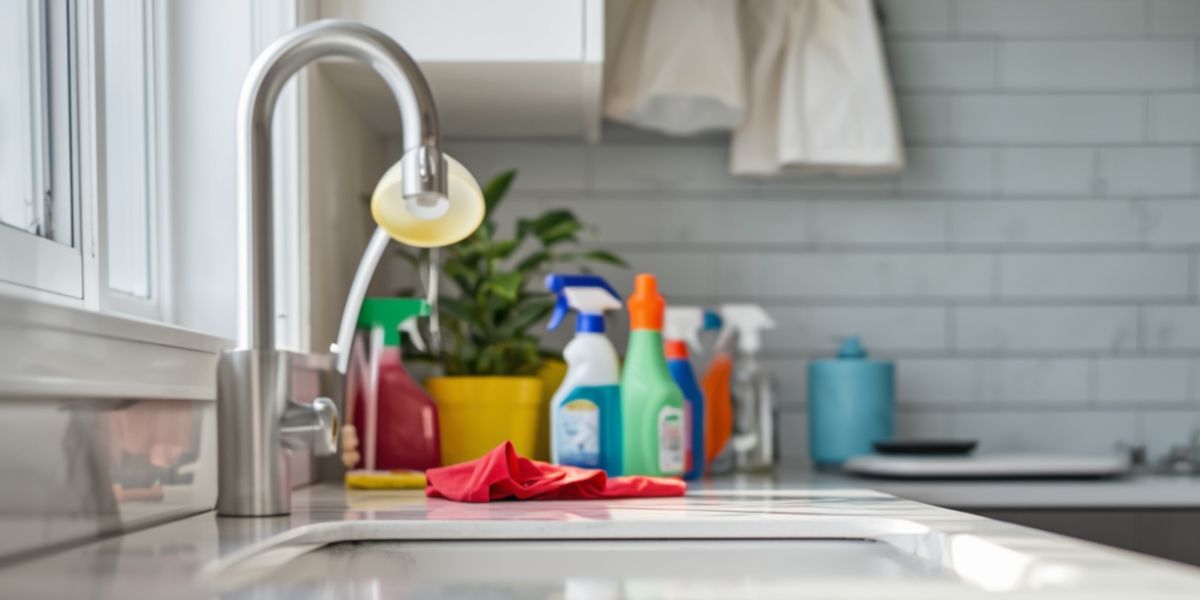
No, and this catches out households who have specifically chosen gentler chemistry. A disinfectant addresses microorganisms. A general-purpose cleaner addresses soil and grease. Scale is neither, so neither product touches it regardless of how effective it is at its actual job.
That includes electrolyzed water systems, which is worth stating plainly because they are otherwise well suited to a family home. Hypochlorous acid disinfects and sodium hydroxide lifts grease, and neither dissolves calcium carbonate. The chemistry and its limits are covered in what is electrolyzed water cleaning and how does it actually work. Removing scale requires an acidic descaler, which is a different product category entirely.
Does hard water make bathroom mildew worse?
Indirectly, and the interaction is worth understanding because the two problems are usually treated separately. Scale and soap scum create a rougher, more porous surface film than clean tile or glass, and that texture holds moisture longer after each use. Longer-lasting moisture is what mildew needs.
The Environmental Protection Agency advises keeping indoor humidity “below 60 percent (ideally between 30 and 50 percent) relative humidity” and drying wet materials within 24 to 48 hours to prevent mold growth. In a hard water bathroom, descaling and ventilation work together: removing the film means surfaces dry faster, which means less mildew. The full local picture is in mold and mildew in Mid-Cities bathrooms.
What actually works against hard water in a Mid-Cities home?
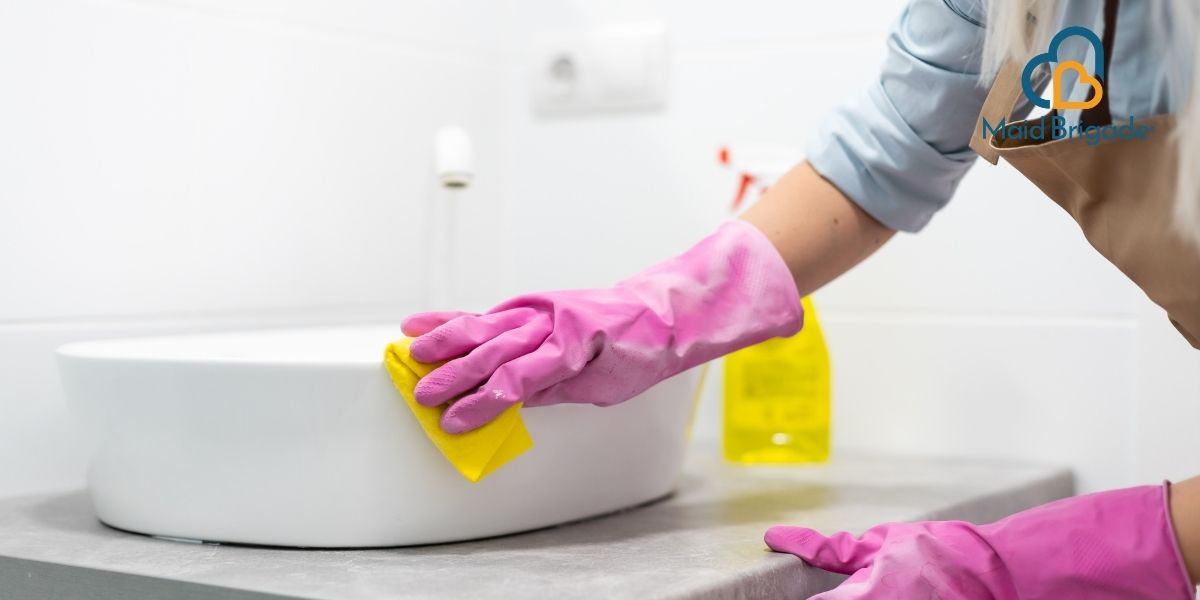
Three things, in ascending order of cost and effect. Drying surfaces after use, which prevents deposits forming at all and costs nothing. Regular descaling of fixtures, glass, and aerators, which removes what has already formed. And a water softener, which is the only measure that addresses the cause rather than the symptom.
Most households get the largest practical gain from the first two combined with recurring cleaning that keeps the film from establishing. A softener is a plumbing investment and a household decision, and it is worth noting that it changes what your cleaning routine has to fight rather than eliminating cleaning. To set up recurring service that keeps the film down, request a free, no-obligation quote.
What does Maid Brigade of Greater Fort Worth do differently?
Maid Brigade of Greater Fort Worth is candid about the boundary between what cleaning fixes and what it does not, which matters more on this topic than on almost any other. Crews clean and manage the soap scum and film that hard water produces, and they will tell you when a shower enclosure has passed from deposit into permanent etching rather than promising a result no product can deliver.
The company arrives fully equipped and generates its own cleaning agents on site from salt, water, and electricity through its PUREcleaning system, which handles soil and disinfection well and is not a descaler. That distinction is exactly the point of this guide. Recurring service is the realistic tool against hard water, because it prevents film establishing rather than trying to reverse years of buildup in one visit. Serving Fort Worth, Hurst, Euless, Bedford, Colleyville, North Richland Hills, Keller, Southlake, Grapevine, Watauga, and Haltom City, the company can walk your bathrooms and tell you honestly what is recoverable if you book a visit.
How do Fort Worth homeowners actually decide?
The households that stop being frustrated by this are the ones who separate the three problems instead of treating them as one. Existing scale needs descaling, and that is a one-off task. Ongoing film needs regular cleaning, and that is a cadence question. The underlying mineral load needs a softener, and that is a plumbing decision.
The households that stay frustrated keep buying stronger general-purpose cleaners for a problem that is not a cleaning problem. If your shower glass has been cloudy for three years, no product on any shelf will fix it. Decide what is recoverable, protect what still is with a squeegee, and let recurring service hold the rest. To talk it through for your own home, contact the office.
Key Takeaways
- The City of Fort Worth reports total hardness of 138 to 178 parts per million, or 8 to 10 grains per gallon, which is inside the USGS hard band.
- Scale is a mineral deposit rather than soil, so detergents and disinfectants do not remove it regardless of quality.
- Hard water reacts with soap to form soap scum, which is why using more soap makes bathroom film worse rather than better.
- Shower glass left cloudy long enough becomes permanently etched, and no product reverses that, so squeegeeing after use is the only real prevention.
- Scale inside pipes, water heaters, and appliances is a plumbing and appliance task, outside what any cleaning service can address.
- Descaling removes existing deposits, recurring cleaning prevents film establishing, and only a water softener changes the underlying cause.
FAQ
How hard is the water in Fort Worth?
The City of Fort Worth’s published water quality reporting gives total hardness as 138 to 178 parts per million as calcium carbonate, equivalent to 8 to 10 grains per gallon. On the United States Geological Survey scale, water between 121 and 180 milligrams per liter is classified as hard, so Fort Worth sits inside that band toward its upper end. The variation reflects which lakes and treatment plants supply a given area at a given time.
Why does my shower glass stay cloudy after cleaning?
Because the cloudiness is either mineral scale that needs an acidic descaler rather than a detergent, or permanent etching where minerals have interacted with the glass surface itself. Early deposits respond to descaling. Long-established clouding usually does not, because the damage is in the glass rather than on it. Squeegeeing after every use prevents the problem, which is why it is worth more than any product bought afterwards.
Will a green or non-toxic cleaner remove hard water stains?
No, and neither will a conventional one, because the issue is product category rather than product strength. General-purpose cleaners lift soil and grease, disinfectants address microorganisms, and neither dissolves calcium carbonate. Removing scale requires an acidic descaler. This applies equally to electrolyzed water systems, which handle cleaning and disinfection well and do nothing for mineral deposits.
Does hard water damage my plumbing?
Over time, yes. The USGS notes that scale can reduce equipment life, raise water heating costs, lower the efficiency of electric water heaters, and clog pipes, and that long-term movement of hard water gradually narrows pipes and reduces water pressure. These are plumbing and appliance maintenance matters rather than cleaning tasks, so they need a plumber rather than a cleaning service.
Is a water softener worth it in the Mid-Cities?
It is the only measure that addresses the cause rather than the symptoms, and it is a plumbing investment with ongoing salt and maintenance costs. Whether it pays depends on how much the spotting and scale bother you, the age and value of your fixtures and appliances, and how long you plan to stay. It reduces what your cleaning routine has to fight rather than removing the need for cleaning.
Can a cleaning service descale my shower head?
Many will soak or treat an aerator or shower head as part of a deep clean if you ask, and it is worth asking rather than assuming, since it is not usually in a standard scope. Heavily crusted parts are sometimes cheaper to replace than to restore. What sits outside any cleaning service is scale inside the water heater, the pipes, or the internal workings of a dishwasher or washing machine.
Bottom Line
Fort Worth’s water is officially hard at 8 to 10 grains per gallon, and that single fact explains most recurring bathroom frustration in the Mid-Cities. Separate the problems: descale what has already formed, use recurring cleaning to stop film re-establishing, squeegee glass so deposits never form, and treat pipes and appliances as plumbing work. Above all, know that long-cloudy shower glass is usually etched rather than dirty, and no cleaner will fix it.
Sources
- What is electrolyzed water cleaning and how does it actually work for why a disinfectant does not descale.
- Mold and mildew in Mid-Cities bathrooms for how scale and moisture interact.
- What will a house cleaning service not do for where plumbing work begins.
- Deep clean vs standard clean for whether descaling fits your scope.
- Summer dust and humidity in Fort Worth for the seasonal companion problem.
- City of Fort Worth 2022 Water Quality Report: total hardness of 138 to 178 parts per million, 8 to 10 grains per gallon, total dissolved solids, and alkalinity.
- United States Geological Survey, hardness of water: the soft to very hard classification bands, soap scum formation, and the effects of scale on pipes and water heaters.
- United States Environmental Protection Agency, brief guide to mold, moisture and your home: the recommended indoor humidity range and the 24 to 48 hour drying window.