Medical and Dental Office Disinfection in the Mid-Cities: What to Ask a Cleaning Vendor
By Maid Brigade of Greater Fort Worth, serving Fort Worth and the Mid-Cities since 1989. Editorial verification September 9, 2026.
Last updated: 2026-09-09
Verified against Centers for Disease Control and Prevention infection prevention guidance for dental settings, CDC guidance on when and how to clean and disinfect, and United States Environmental Protection Agency antimicrobial product registration guidance, on September 9, 2026. This guide is general information for practice managers evaluating vendors and is not a compliance program; a practice’s infection prevention coordinator and its own written protocols govern. Desk verification of published sources is the method used.
TL;DR: CDC guidance splits a clinical space into two surface categories with two different rules. Clinical contact surfaces need barriers changed between patients, or cleaning followed by an EPA-registered hospital disinfectant. Housekeeping surfaces like floors and walls can be cleaned with soap and water. A cleaning vendor works the second category, and confusing the two is the risk to check for.
Three failures recur when a Mid-Cities practice hires a general cleaning vendor. The vendor treats every surface identically, either over-treating floors or, far worse, implying it covers clinical surfaces that are actually staff responsibility. Nobody defines the boundary in writing. And a vendor quotes hospital grade as a marketing phrase without knowing that the EPA defines a hospital disinfectant as one “effective against the nosocomial bacterial pathogen Pseudomonas aeruginosa”.
This guide covers the two surface categories, where a cleaning vendor’s scope legitimately sits, the questions that separate a real vendor from a bid, and the claims to distrust.
What is the difference between clinical contact and housekeeping surfaces?
They are two distinct categories with two distinct protocols, and every conversation with a vendor should start here. The CDC describes clinical contact surfaces as those “likely be contaminated by direct spray or spatter generated during dental procedures” or by contaminated gloved hands, naming “light handles, bracket trays, switches on dental units, and computer equipment”.
Housekeeping surfaces are the other category. The CDC describes them as surfaces that “do not come into contact with patients or devices used in dental procedures” and that “have a limited risk of disease transmission”, naming floors, walls, and sinks.

What does CDC guidance require for each category?
Different products and different frequencies, which is the substance of the distinction rather than a technicality.
| Surface category | Examples | CDC approach |
|---|---|---|
| Clinical contact, barrier protected | Light handles, switches, computer equipment | FDA-approved barrier, changed between each patient |
| Clinical contact, not barrier protected | Bracket trays, uncovered controls | Clean, then EPA-registered low-level hospital disinfectant effective against HIV and HBV |
| Clinical contact, visibly contaminated | Any surface with visible blood or spatter | Clean, then EPA-registered intermediate-level hospital disinfectant with a tuberculocidal claim |
| Housekeeping | Floors, walls, sinks | Soap and water, or clean and disinfect if visibly contaminated with blood |
| Any surface | All of the above | High-level disinfectants never used on environmental surfaces |
| Sequence | All of the above | Cleaning always precedes disinfection |
The CDC is explicit that clinical contact surfaces “should be barrier protected with a Food and Drug Administration (FDA)-approved surface barrier” and that this barrier “should be changed between each patient”.
Where does a cleaning vendor’s scope actually sit?
In the housekeeping category, and any vendor implying otherwise should worry you. Clinical contact surfaces are handled by trained clinical staff between patients, following the practice’s own written infection prevention protocol, because the work happens continuously through the day and requires clinical judgment about what has been contaminated.
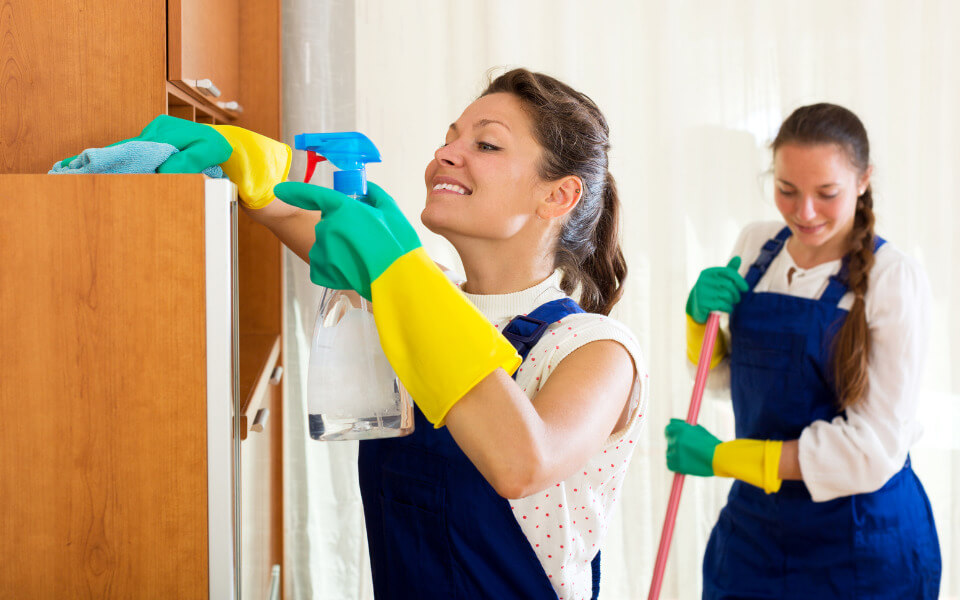
A cleaning vendor’s legitimate scope is floors, walls, sinks, restrooms, waiting areas, break rooms, offices, and general housekeeping, plus non-clinical high-touch points such as door handles and reception surfaces. A vendor claiming to cover operatory turnover between patients is describing something that is not a janitorial function. The general commercial version of scoping this is in office cleaning in Fort Worth.
Why should a vendor never use a high-level disinfectant on surfaces?
Because CDC guidance rules it out plainly, stating that high-level disinfectants “should never be used on environmental surfaces”. Those products are formulated for critical and semi-critical instruments, and applying them to floors, counters, or walls is a misuse with real safety and material implications.
This is a genuinely useful screening question when interviewing a vendor. Ask which specific products they would apply to which surfaces, and whether any of them are liquid chemical sterilants or high-level disinfectants. A vendor who offers the strongest available product as a selling point has told you they do not understand the setting.
What does hospital grade actually mean on a vendor’s quote?
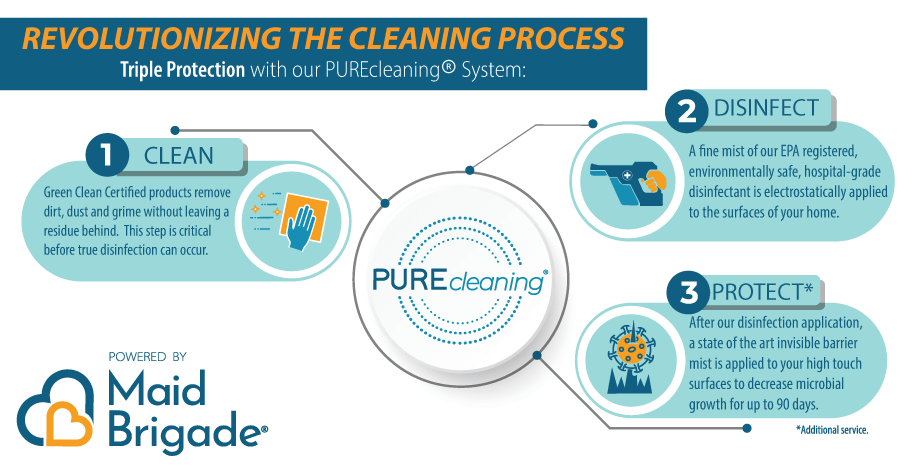
Less than it sounds, and knowing the definition changes how you read a bid. The EPA registers disinfectants in three tiers. A limited disinfectant is effective against one major group of microorganisms. A general or broad-spectrum disinfectant is “effective against both gram-positive and gram-negative bacteria (Staphylococcus aureus and Salmonella enterica)”. A hospital disinfectant adds demonstrated efficacy against Pseudomonas aeruginosa.
The tier is earned by submitting efficacy data, so a registered product carries an EPA registration number. Equipment generating a disinfectant on site is a different thing: the EPA states that “FIFRA does not require registration of devices” and that an establishment number implies no review of safety or efficacy. For a clinical setting, ask for the registration number and the label rather than accepting the phrase. The full explanation is in what does hospital grade disinfectant actually mean.
What questions should a practice manager actually ask?
Six, and they take ten minutes. Which surfaces in this practice do you consider in your scope, and which do you consider clinical staff responsibility? Which specific products would you apply in each area, and can you provide the labels and EPA registration numbers? What contact time does each product require, and do crews observe it? How do you prevent cross-contamination between restrooms, operatories, and break areas? Are the specific individuals entering the practice background-checked? And what happens when the regular crew is unavailable?
The cross-contamination answer is the most revealing. A vendor without a color-coded or otherwise systematized cloth and mop discipline is a vendor whose crew may carry material from a restroom into a clinical corridor. The CDC’s foundational sequence applies throughout: “clean the surface with soap and water first”, because “impurities like dirt may make it harder for sanitizing or disinfecting chemicals to kill germs”. To run these questions past a vendor, contact the office.
What should a practice put in the written scope?
A room-by-room, surface-by-surface split that names the boundary explicitly rather than leaving it to be inferred. The document should state which surfaces the vendor treats, which the practice’s own staff treat, which products are used where, and what the escalation route is when something is missed.
Include access and after-hours procedures, since most clinical cleaning happens outside patient hours, and include a named contact on both sides. The recurring failure in this arrangement is not poor cleaning, it is an undefined boundary that leaves a category of surfaces unowned by anyone. For details of what a commercial engagement covers, see the commercial cleaning service page, or request a free, no-obligation quote built on a walkthrough.
What does Maid Brigade of Greater Fort Worth do differently?
Maid Brigade of Greater Fort Worth is clear about operating in the housekeeping category and about what that boundary means, which is the appropriate position for a residential and commercial cleaning company rather than a specialist healthcare environmental services contractor. Clinical contact surface protocols remain the practice’s own responsibility under its written infection prevention program.
Within that scope, three things apply. Crews work a multi-fiber cloth system intended to prevent cross-contamination between areas, which is directly relevant in a building with restrooms, clinical corridors, and break rooms. Cleaning precedes any disinfection step rather than replacing it. And crews are trained, background-checked, and covered by liability and workers’ compensation insurance, which matters for after-hours access to premises holding patient records and controlled materials. Serving Fort Worth, Hurst, Euless, Bedford, Colleyville, North Richland Hills, Keller, Southlake, Grapevine, Watauga, and Haltom City, the company can walk a practice and scope the boundary in writing if you book a visit.
How do Mid-Cities practices actually decide?
The practices that get this right define the boundary before they compare prices. They map every surface into clinical contact or housekeeping, assign each category an owner, and put that in the vendor agreement. Only then do they read the bids.
The practices that run into trouble hire on price and discover months later that a category of surfaces belonged to nobody, or that a vendor has been applying an inappropriate product to a clinical corridor. Ask the six questions, get the labels and registration numbers, and be most skeptical of the vendor promising the strongest chemistry, since CDC guidance is explicit that the strongest products have no place on environmental surfaces at all.
Key Takeaways
- CDC guidance splits clinical spaces into clinical contact surfaces and housekeeping surfaces, with different protocols for each.
- Clinical contact surfaces need FDA-approved barriers changed between each patient, or cleaning followed by an EPA-registered hospital disinfectant.
- Housekeeping surfaces such as floors, walls, and sinks can be cleaned with soap and water unless visibly contaminated with blood.
- High-level disinfectants should never be used on environmental surfaces, so a vendor offering the strongest product is a warning sign.
- A cleaning vendor’s legitimate scope is the housekeeping category, since clinical contact surfaces are handled by trained staff between patients.
- The recurring failure is an undefined boundary, so the written scope should assign every surface category to a named owner.
FAQ
Can a regular cleaning company clean a dental office?
For housekeeping surfaces, yes, and that is the appropriate scope: floors, walls, sinks, restrooms, waiting areas, break rooms, offices, and non-clinical high-touch points. Clinical contact surfaces are handled by trained clinical staff between patients under the practice’s own written infection prevention protocol. A vendor claiming to cover operatory turnover is describing something that is not a janitorial function, which should prompt questions.
What is a clinical contact surface?
The CDC describes clinical contact surfaces as those likely to be contaminated by direct spray or spatter generated during procedures, or by contaminated gloved hands, and names light handles, bracket trays, switches on dental units, and computer equipment. They are distinguished from housekeeping surfaces such as floors, walls, and sinks, which do not come into contact with patients or with devices used in procedures and carry a limited risk of disease transmission.
What disinfectant should be used in a medical or dental office?
It depends on the surface category. CDC guidance calls for an EPA-registered low-level hospital disinfectant effective against HIV and HBV on uncontaminated clinical contact surfaces, and an EPA-registered intermediate-level hospital disinfectant with a tuberculocidal claim where a surface is visibly contaminated. Housekeeping surfaces can be cleaned with soap and water. High-level disinfectants should never be used on environmental surfaces.
How do I verify a vendor’s hospital grade claim?
Ask for the product label and its EPA registration number, since the tier is earned by submitting efficacy data and a registered product carries a registration number. The EPA defines a hospital disinfectant as a broad-spectrum disinfectant also effective against Pseudomonas aeruginosa. Be aware that equipment generating a disinfectant on site is regulated as a device, and the EPA states devices are not registered and that an establishment number implies no efficacy review.
How should a vendor prevent cross-contamination in a practice?
Through a systematized cloth and mop discipline, typically color-coded or otherwise separated by area, so that material used in a restroom never reaches a clinical corridor or a break room. Ask the vendor to describe the system specifically rather than accepting a general assurance. This is the single most revealing question in a vendor interview, because a company without a system usually cannot describe one.
What belongs in the written scope for a clinical practice?
A room-by-room, surface-by-surface split naming which surfaces the vendor treats and which the practice’s own staff treat, the products used in each area with their registration numbers, contact times, the cross-contamination protocol, access and after-hours procedures, background check confirmation, cover arrangements, and a named contact on each side. The failure mode is an undefined boundary leaving a category of surfaces owned by nobody.
Bottom Line
The whole question turns on one distinction: clinical contact surfaces and housekeeping surfaces have different rules and different owners. A cleaning vendor belongs in the housekeeping category, and the risk to check for is a vendor who blurs the line or sells the strongest chemistry available, which CDC guidance says has no place on environmental surfaces. Map every surface, assign an owner in writing, ask for labels and registration numbers, and read the bids last.
Sources
- Office cleaning in Fort Worth for general commercial scoping and pricing.
- What does hospital grade disinfectant actually mean for the registration tiers in full.
- What is electrolyzed water cleaning and how does it actually work for on-site generated chemistry and its evidence base.
- Cleaning after a household illness for contact time and clean-first discipline.
- What will a house cleaning service not do for where a cleaning vendor’s scope ends generally.
- Centers for Disease Control and Prevention, cleaning and disinfecting environmental surfaces in dental settings: the clinical contact and housekeeping surface definitions, barrier requirements, required disinfectant levels, and the prohibition on high-level disinfectants for environmental surfaces.
- United States Environmental Protection Agency, antimicrobial product registration guidance: the limited, general, and hospital disinfectant tier definitions.
- United States Environmental Protection Agency, pesticide devices guide for consumers: that devices are not registered under FIFRA and that an establishment number implies no efficacy review.
- Centers for Disease Control and Prevention, when and how to clean and disinfect: the requirement to clean before disinfecting.