What Will a House Cleaning Service Not Do? The Exclusions Most People Find Out Late
By Maid Brigade of Greater Fort Worth, serving Fort Worth and the Mid-Cities since 1989. Editorial verification September 9, 2026.
Last updated: 2026-09-09
Verified against United States Environmental Protection Agency mold and moisture guidance, Centers for Disease Control and Prevention cleaning and disinfection guidance, and Occupational Safety and Health Administration guidance on bloodborne pathogens on September 9, 2026. Exclusions described here are industry-typical rather than a statement of any one company’s policy, which should be confirmed on the work order. Desk verification of published sources is the method used.
TL;DR: Nearly every residential cleaning company excludes the same things: biohazards, mold remediation beyond a small surface patch, exterior windows, heavy lifting, pest and rodent waste, hoarding conditions, and anything requiring a ladder above a safe height. These are not laziness. They are insurance, licensing, and safety boundaries, and knowing them before you book prevents most first-visit disappointment.
Three versions of the same story turn up in every cleaning company’s inbox. The crew left the mold in the shower. Nobody touched the outside of the windows. The garage was not done. In almost every case the item was never in scope, and the household never knew it was not. The Environmental Protection Agency draws one of these lines explicitly, advising that a moldy area larger than “about 10 square feet” warrants a remediation professional rather than a cleaner.
This guide covers the exclusions almost every company shares, the reasons behind each, the four that surprise people most, and how to check your own scope before the first visit.
What will a house cleaning service not do?
Residential cleaning companies clean surfaces in habitable, reasonably accessible parts of a home. They do not perform remediation, repair, pest control, hazardous material handling, or work at heights. Those are separate trades with separate licensing, training, and insurance.
The clearest way to think about it is that a cleaning company is insured to clean. The moment work crosses into remediation or hazard handling, the company’s insurance no longer covers it and the crew has not been trained for it, which is why the answer is no regardless of how willing an individual cleaner might personally be.
Why do these exclusions exist at all?
Because of insurance, licensing, and physical safety, in that order of frequency. A cleaning company’s liability policy is written for cleaning. Work outside that description can void coverage, which would leave both the company and the homeowner exposed if something went wrong.
Licensing is the second constraint. Pest control is a licensed activity in Texas. Mold remediation above a threshold is a specialist discipline. Electrical and plumbing work require trades licences. The third is straightforward physical risk: falls from height and lifting injuries are the two most common serious injuries in this industry, which is why ladder height and furniture weight are capped.
What are the standard exclusions almost every company shares?
The list below is industry-typical. Individual companies differ at the margins, which is exactly why it belongs on your work order rather than in your assumptions.
| Excluded | Why | Who does it instead |
|---|---|---|
| Biohazards: blood, vomit, human or pet waste beyond routine | Bloodborne pathogen exposure, specialist training and disposal | Biohazard remediation specialist |
| Mold beyond a small surface patch | EPA advises a professional above about 10 square feet | Mold remediation contractor |
| Exterior windows, second storey and above | Work at height, different equipment and insurance | Window cleaning company |
| Heavy furniture moving | Lifting injury risk and property damage liability | Movers, or homeowner in advance |
| Pest and rodent droppings | Licensed activity, disease exposure risk | Licensed pest control operator |
| Hoarding conditions | Structural, biohazard and safety assessment needed | Specialist remediation service |
| Ladders above a safe working height | Fall risk, the leading serious injury in the trade | Handyman or specialist contractor |
| Pet accidents in carpet, deep extraction | Requires extraction equipment and treatment | Carpet cleaning specialist |
| Laundry, dishes, tidying personal items | Usually out of scope by default, sometimes an add-on | Confirm as an add-on if wanted |
| Wall washing, ceilings, air duct interiors | Different trade and equipment | Painters, duct cleaning contractor |
Why will they not clean the mold in my shower?
They usually will clean surface mildew on tile and grout, and they will usually decline anything larger or embedded, which is a distinction worth understanding rather than resenting. Routine bathroom mildew is a cleaning task. Established mold is a moisture problem, and cleaning it without fixing the moisture guarantees it returns.
The EPA’s guidance is that “if the moldy area is less than about 10 square feet (less than roughly a 3 ft. by 3 ft. patch), in most cases, you can handle the job yourself”, with larger areas warranting professional consultation. The agency also advises against routine biocide use, stating that chlorine bleach “is not recommended as a routine practice” and recommending instead that you “scrub mold off hard surfaces with detergent and water, and dry completely”. The local version of this problem is covered in mold and mildew in Mid-Cities bathrooms.
Why will they not move my furniture?
Because lifting injuries and property damage are the two risks a cleaning company can least afford, and neither is covered by cleaning insurance. Crews will generally move light items, chairs, and small tables. They will not move sofas, beds, wardrobes, appliances, or anything requiring two people and a lifting technique.
The practical workaround is straightforward. If you want under a bed or behind a sofa cleaned, move it before the crew arrives, or ask in advance whether the company can schedule it on a visit where extra hands are available. Presenting it as a surprise on the day is what produces a no.
Why will they not deal with pet accidents or litter areas?
Routine litter box changing and surface cleanup around a pet area is often available as an add-on, and it must be agreed rather than assumed. What is genuinely excluded is soaked carpet, embedded urine, and anything requiring extraction equipment or enzyme treatment.
The reason is capability rather than squeamishness. Removing urine from carpet padding needs extraction equipment a cleaning crew does not carry, and surface cleaning alone leaves the odor source in place, which is why the smell returns within days. Households dealing with this will find the workable approach in pet dander and odor cleaning for Fort Worth dog and cat owners.
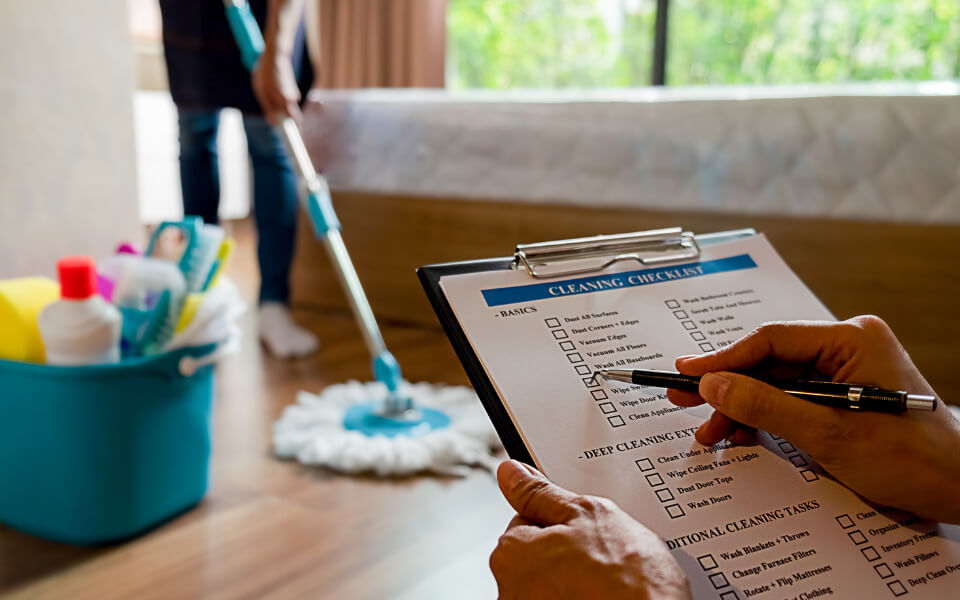
What about disinfecting after someone has been ill?
This one is usually available and usually needs to be requested, which is the opposite of what people assume. Routine visits are cleaning visits. The Centers for Disease Control and Prevention states that “in most situations, cleaning regularly is enough to prevent the spread of germs”, reserving disinfection for areas where people have obviously been ill.
Where an actual biohazard is involved, meaning blood or bodily fluids beyond a routine amount, that crosses into territory covered by Occupational Safety and Health Administration bloodborne pathogens rules and belongs to a specialist. For an ordinary household stomach bug, ask for a disinfection pass and specify the surfaces. The full sequence is in cleaning after a household illness.
What does Maid Brigade of Greater Fort Worth do differently?
Maid Brigade of Greater Fort Worth works to a written scope agreed at the outset rather than to an assumed one, which is the mechanism that prevents most of the disappointment described in this guide. Crews arrive fully equipped, so the household is not asked to supply anything, and the company generates its own cleaning agents on site from salt, water, and electricity through its PUREcleaning system.
Two things matter when an exclusion comes up. The company’s crews are trained, background-checked, and covered by liability and workers’ compensation insurance, which is the structure that defines what is and is not covered work. And it backs its service with a satisfaction guarantee, stating that if you are not satisfied for any reason it will come back to make it right, which is the route for something genuinely in scope that was missed, as distinct from something that was never in scope. To agree scope for your own home before anyone arrives, request a free, no-obligation quote.
How do Fort Worth homeowners actually decide?
They stop assuming and start reading the work order, which sounds obvious and is nonetheless the single highest-value habit in this whole relationship. A scope written down is a scope you can hold someone to. A scope you inferred from a website is not.
Three questions settle almost everything. What is explicitly included, room by room? What is available as an add-on if I ask, such as interior appliances, laundry, or litter areas? And what is excluded outright, so I know to hire someone else? Walk that list at the first visit and the surprises largely disappear. For the wider pre-hire sequence, see what to ask before hiring a house cleaning company in Fort Worth, or contact the office to run through it directly. If you would rather set it up in one conversation, book a visit.
Key Takeaways
- Cleaning companies clean surfaces in habitable, accessible areas, and do not perform remediation, repair, pest control, or hazardous material handling.
- Exclusions exist because of insurance coverage, licensing requirements, and physical safety, not because of unwillingness.
- The EPA advises professional consultation for moldy areas larger than about 10 square feet, which is the line most cleaning companies apply.
- Heavy furniture moving is excluded because lifting injuries and property damage are not covered by cleaning insurance.
- Disinfection after illness is usually an add-on that must be requested, while genuine biohazards belong to a specialist under OSHA bloodborne pathogen rules.
- The reliable fix for all of this is a written scope agreed at the first visit, listing what is included, what is optional, and what is excluded.
FAQ
Will cleaners wash my exterior windows?
Generally not, especially above the ground floor. Exterior window cleaning involves work at height, different equipment, and different insurance, which places it with a specialist window cleaning company rather than a residential cleaning service. Interior windows and glass are more often available, sometimes as an add-on rather than in the standard scope, so ask specifically and get the answer recorded on the work order.
Will cleaners do my laundry or dishes?
This varies more than almost any other item, which is why it should never be assumed. Some companies include loading a dishwasher or a load of laundry, some offer it as an add-on, and some exclude it entirely so crews can focus on surfaces. Because it is genuinely company-specific, ask directly rather than inferring from a website, and have the answer written down before the first visit.
Will cleaners remove mold from my bathroom?
They will typically clean surface mildew from tile and grout as part of normal bathroom cleaning, and will decline larger or embedded growth. The EPA advises professional consultation above roughly 10 square feet. It also recommends scrubbing mold off hard surfaces with detergent and water rather than routinely using bleach. The underlying issue is moisture, so cleaning without addressing humidity or a leak means it returns.
Will cleaners move heavy furniture to clean underneath?
No, and this is consistent across the industry. Crews move light items and small furniture but not sofas, beds, wardrobes, or appliances, because lifting injuries and property damage sit outside cleaning insurance. If you want those areas reached, move the item yourself before the visit or ask in advance whether the company can schedule it when extra help is available.
Will cleaners handle pet accidents or clean the litter box?
Litter box changing and surface cleanup are often available as an add-on if agreed in advance. Soaked carpet, embedded urine, and odor extraction are excluded, because they need extraction equipment and enzyme treatment that a cleaning crew does not carry. Surface cleaning alone leaves the odor source in the padding, which is why the smell comes back within days.
What happens if something I expected was not done?
Establish first whether the item was in scope. If it was, that is a service issue with a defined remedy, and a reputable company will return to address it. If it was never in scope, the productive conversation is about adding it as an agreed item going forward or hiring the right trade for it. This is precisely why walking the written scope at the first visit prevents so many later disagreements.
Bottom Line
Most disappointment with a cleaning service is a scope problem wearing a quality problem’s clothes. The exclusions are consistent across the industry and they exist for insurance, licensing, and safety reasons rather than convenience. Read the work order, ask what is optional, and ask what is excluded outright so you know who else to call. Settling that in one conversation before the first visit is worth more than any amount of hoping.
Sources
- What is included in a standard house cleaning checklist for the baseline scope.
- Deep clean vs standard clean for what expands when you upgrade scope.
- Mold and mildew in Mid-Cities bathrooms for the moisture problem behind bathroom mold.
- Pet dander and odor cleaning for Fort Worth dog and cat owners for what pet odor actually requires.
- Cleaning after a household illness for requesting a disinfection pass.
- What to ask before hiring a house cleaning company in Fort Worth for the pre-hire sequence.
- United States Environmental Protection Agency, brief guide to mold, moisture and your home: the 10 square foot threshold, the detergent and water method, and the caution against routine bleach use.
- Centers for Disease Control and Prevention, when and how to clean and disinfect: when routine cleaning is sufficient and when disinfection applies.
- Occupational Safety and Health Administration, bloodborne pathogens: the regulatory framework covering occupational exposure to blood and other potentially infectious materials.