
Deep Clean vs Standard Clean: What Actually Changes, and Which One Do You Need?
By Maid Brigade of Greater Fort Worth, serving Fort Worth and the Mid-Cities since 1989. Editorial verification September 9, 2026.
Last updated: 2026-09-09
Verified against Asthma and Allergy Foundation of America dust mite guidance, Centers for Disease Control and Prevention cleaning and disinfection guidance, and United States Environmental Protection Agency mold and moisture guidance on September 9, 2026. The Elizabeth Scott quotation was confirmed at the American Society for Microbiology page where it appears. Desk verification of published sources is the method used for this guide.
TL;DR: A standard clean maintains surfaces you see and touch weekly. A deep clean reaches the surfaces a weekly visit never touches: baseboards, vents, ceiling fans, blinds, window tracks, appliance interiors, and the edges under furniture. Most households need one deep clean to reset the house, then recurring standard cleans to hold it. Booking recurring service without the reset is the single most common mistake.
Three frustrations send people looking for this answer. The house is technically clean but feels grimy. A recurring service has been coming for months and something still looks neglected. Or allergy symptoms have not improved despite constant tidying, which is unsurprising given that 20 million people in the United States have a dust mite allergy and dust mites live in exactly the fabrics a standard visit does not disturb.
This guide covers what each service actually reaches, why the difference is surfaces rather than hours, which one your situation calls for, and the sequence that avoids paying twice.
What is the difference between a deep clean and a standard clean?
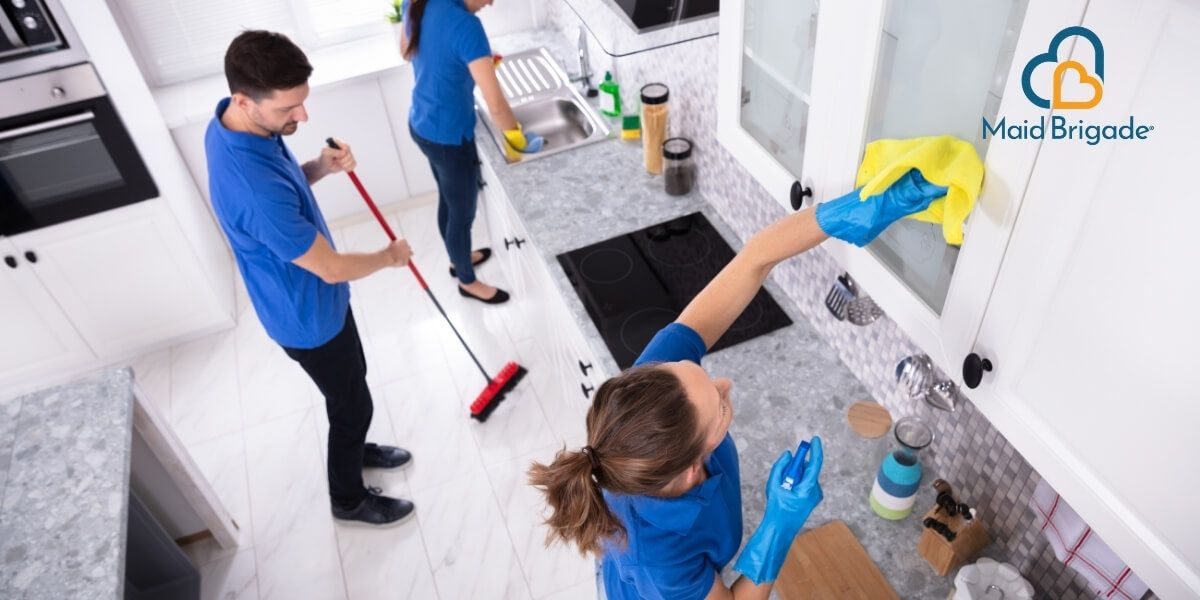
A standard clean maintains the surfaces of daily life. A deep clean reaches surfaces that accumulate soil slowly and invisibly, then resets them. The difference is not effort or duration but which surfaces are in scope at all, which is why a longer standard visit never turns into a deep one.
Put concretely: a standard clean wipes your counters, cleans your bathrooms, vacuums and mops your floors, and tidies visible surfaces. A deep clean does all of that and adds baseboards, door frames, light fixtures, ceiling fan blades, air vents and registers, window sills and tracks, blinds, cabinet fronts, appliance exteriors and sometimes interiors, and the floor edges and corners a vacuum normally skirts.
What does each service actually reach?
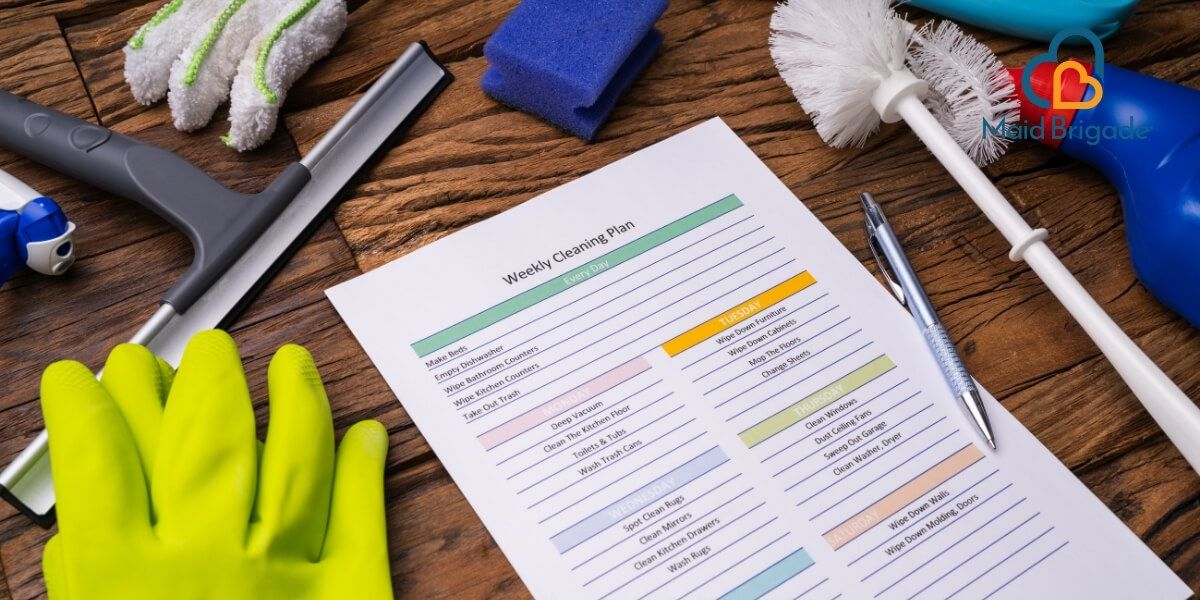
Scope is where expectations break, so the table below is the version worth screenshotting before you book. Most post-visit disappointment traces back to assuming an item was included when it was never on the list at all.
| Surface | Standard clean | Deep clean | Why it matters |
|---|---|---|---|
| Counters, sinks, visible surfaces | Full | Full | Daily-use hygiene |
| Toilets, tubs, showers | Full | Full, plus grout and track detail | Where soil is visible and constant |
| Floors | Vacuum and mop | Plus edges, corners, under reachable furniture | Where fine particles settle |
| Baseboards and door frames | Spot only | Wiped throughout | Collects dust invisibly for months |
| Ceiling fans and light fixtures | Skipped or light | Detailed, top down | Redistributes dust every time it runs |
| Air vents and registers | Skipped | Wiped | Pushes settled dust back into rooms |
| Blinds and window tracks | Light pass | Detailed | Holds pollen and fine particles |
| Cabinet fronts and appliance exteriors | Spot only | Wiped throughout | Grease film builds slowly |
| Inside oven, fridge, cabinets | Not included | On request, usually add-on | Almost never included by default |
| Walls, ceilings, windows exterior | Not included | Not included | Different trade entirely |
The last two rows are where expectations most often break. Interior appliance cleaning is typically an add-on even on a deep clean, and exterior windows are generally a different service altogether. The full baseline scope is in what is included in a standard house cleaning checklist.
Why does a longer standard clean not equal a deep clean?
Because the constraint is scope, not time. A crew given four hours instead of two for a standard clean will clean the same surfaces more carefully. They will not start wiping baseboards unless baseboards are in the agreed scope, because they are working a defined list.
This is also why “they did not do a very good job” is often a scope problem rather than a quality problem. A homeowner looking at a dusty vent after a maintenance visit is looking at an item that was never on the list. Agreeing scope in writing at the first visit prevents almost all of this, which is part of why what to expect at your first house cleaning and how to prepare matters more than people assume.
Which one does a home with allergies or asthma need?
A deep clean first, then recurring standard cleans, because the allergen reservoirs sit almost entirely in deep-clean territory. Dust mites, pet dander, and pollen accumulate in bedding, upholstery, carpet, blinds, and vents rather than on the counters a weekly visit wipes.
The Asthma and Allergy Foundation of America recommends washing bedding weekly “in water that’s at least 130 F or more to kill dust mites”, using “a vacuum cleaner with a HEPA filter weekly”, and keeping household humidity “between 30 and 50%”. None of that happens on its own. This is not medical advice, and anyone managing diagnosed asthma should agree their own priorities with a clinician. The detailed local version is in house cleaning for allergy and asthma sufferers in Fort Worth.
Which one does a move-in or move-out need?
A deep clean, without exception, and the reason is different in each direction. Moving in, you are inheriting a stranger’s accumulated soil in every place you cannot see, and the house is empty, which is the only time baseboards, floor edges, and cabinet interiors are genuinely accessible.
Moving out, the standard being applied is somebody else’s, whether that is a landlord assessing a deposit or a buyer walking through. An empty property shows every mark that furniture used to hide. The specifics are covered in move-in deep clean for Fort Worth first-time buyers and move-out cleaning for apartments in Bedford, Euless and Hurst.
Which one does a first-time client need?
Almost always a deep clean first, then recurring standard service. A recurring clean is designed to hold a home at a level, not to bring it up to one, so starting recurring service on a house that has never had a professional reset means paying maintenance rates for a job that is not maintenance.
The predictable outcome is a household three months into a contract wondering why the house has never quite looked right. It is the most common and most expensive sequencing mistake in this industry. The tradeoff between the two is worked through in one-time deep clean vs starting recurring service, and pricing differences are in the Fort Worth house cleaning cost guide. If you are unsure which applies to your house, request a free, no-obligation quote and describe the current state honestly.
Does a deep clean disinfect the house?
Not automatically, and conflating the two leads people to buy the wrong service. Cleaning removes soil. Disinfecting kills microorganisms on an already-clean surface. The Centers for Disease Control and Prevention states that “in most situations, cleaning regularly is enough to prevent the spread of germs”, reserving disinfection for areas where people have obviously been ill.
Elizabeth Scott, Ph.D., co-director and founder of the Simmons Center for Hygiene and Health in Home and Community, argues for what she calls targeted hygiene, an approach that “prevents the spread of harmful microbes in a targeted manner. It addresses sustainability issues, it avoids the overuse of chemicals and microbicides, it sustains exposure to beneficial microbes”. In practice that means cleaning thoroughly and disinfecting the handful of surfaces that actually matter, rather than treating every surface in the house.
Does a deep clean fix mold or hard water scale?
No, and this is worth knowing before you book one hoping it will. Mold is a moisture problem, and the Environmental Protection Agency advises that “if the moldy area is less than about 10 square feet (less than roughly a 3 ft. by 3 ft. patch), in most cases, you can handle the job yourself”, with larger areas warranting a remediation professional rather than a cleaning crew.
Hard water scale is a mineral deposit rather than soil, which is why Fort Worth homes accumulate cloudy film on shower glass no matter how often they are cleaned. Both problems have their own guides: mold and mildew in Mid-Cities bathrooms and hard water and mineral buildup in Fort Worth homes.
What does Maid Brigade of Greater Fort Worth do differently?
Maid Brigade of Greater Fort Worth runs both services with the same crews and the same chemistry, generated on site from salt, water, and electricity through the system it calls PUREcleaning, which the company describes as environmentally friendly, non-toxic, non-irritant and safe for you, your family and pets. Crews arrive fully equipped, so the household buys and stores nothing.
Two details matter for the deep-versus-standard decision specifically. Crews work a multi-fiber cloth system intended to prevent cross-contamination between rooms, which is what keeps a bathroom cloth from reaching a kitchen counter during a long deep clean. And the company backs its work with a satisfaction guarantee, stating that if you are not satisfied for any reason it will come back to make it right, which is the practical answer to a scope disagreement after a first visit. To set scope for your own home, book a visit.
How do Fort Worth homeowners actually decide?
The honest decision rule is short. If the house has never had a professional reset, or if more than a year has passed since the last one, start with a deep clean. If it is already being maintained, a standard clean holds it. If you are moving in either direction, deep clean without debating it.
The second rule is about cadence. Most Mid-Cities households settle on one deep clean to reset, then biweekly standard service, with an additional deep clean at a seasonal hinge point: before cedar season in December, or after ragweed subsides in November. Cadence choices are worked through in how often should you book house cleaning, and if you would rather have someone assess it in person, contact the office.
Key Takeaways
- A standard clean maintains the surfaces of daily life, while a deep clean resets surfaces that accumulate soil slowly: baseboards, vents, fans, blinds, tracks, and floor edges.
- The difference is scope rather than duration, which is why a longer standard clean does not become a deep clean.
- Starting recurring service on a home that has never had a professional reset is the most common and most expensive sequencing mistake.
- Allergy and asthma households need the deep clean first, because allergen reservoirs sit in bedding, upholstery, blinds, and vents rather than on counters.
- Cleaning and disinfecting are separate operations, and the CDC states that regular cleaning is generally sufficient when nobody is ill.
- A deep clean does not resolve mold, which is a moisture problem, or hard water scale, which is a mineral deposit.
FAQ
How often should I get a deep clean?
For most Mid-Cities households, once to reset the home and then annually or twice a year at seasonal hinge points, with recurring standard service holding the level in between. Homes with pets, allergies, heavy foot traffic, or recent construction dust usually justify twice a year. A home that is professionally maintained on a biweekly schedule needs the reset less often than one cleaned occasionally.
Is a deep clean worth it if my house already looks clean?
Often yes, because the surfaces a deep clean targets are precisely the ones you do not look at. Baseboards, vent covers, ceiling fan blades, and window tracks accumulate for months without registering visually, and fan blades and vents actively redistribute that dust every time the system runs. If the house looks fine but feels dusty within a day of cleaning, that is usually what is happening.
Do I need a deep clean before starting recurring service?
In most cases yes, and this is the single most useful thing to understand before booking. Recurring service is designed to hold a home at a level rather than raise it to one. Beginning maintenance on a house that has never had a professional reset means paying maintenance rates while the accumulated backlog never gets addressed, which is why the house never quite looks right.
Does a deep clean include inside the oven and refrigerator?
Usually not by default, even though most people assume it does. Interior appliance cleaning is typically an add-on service that must be requested and scoped separately, because it is time-intensive and not every household wants it. Ask explicitly when booking and get it written on the work order rather than assuming, since this is one of the most common sources of disappointment after a first deep clean.
Will a deep clean help my allergies?
It addresses the reservoirs, which is a genuine and often underestimated part of the picture, though it is not a treatment. The AAFA recommends washing bedding weekly at 130 degrees Fahrenheit or higher, vacuuming weekly with a HEPA filter, and keeping humidity between 30 and 50 percent. A deep clean resets the accumulated load in fabrics, vents, and blinds so that routine maintenance can hold it. Anyone managing diagnosed asthma should agree priorities with their clinician.
Can I just get a deep clean and skip recurring service?
Yes, and plenty of households do exactly that, booking one or two deep cleans a year and handling maintenance themselves. The tradeoff is that a deep clean’s benefit decays, faster in a home with pets, children, or heavy traffic. If the goal is a house that stays at a level rather than returning to one twice a year, recurring service is what maintains it. Both are legitimate choices depending on what you want to spend and do yourself.
Bottom Line
The deep-versus-standard question is really a sequencing question, and the answer for most households is both, in order: one deep clean to reset the house, then recurring standard service to hold it. Choosing recurring service alone on an unreset home is why so many people conclude that cleaning services do not work. Get the scope written down at the first visit, ask specifically about appliance interiors, and be honest about the current state of the house when you request a free quote.
Sources
- What is included in a standard house cleaning checklist for the baseline scope in detail.
- One-time deep clean vs starting recurring service for the sequencing tradeoff.
- How often should you book house cleaning for cadence.
- House cleaning for allergy and asthma sufferers in Fort Worth for the allergen reservoirs a deep clean reaches.
- Fort Worth house cleaning cost guide for how pricing differs between the two.
- What to expect at your first house cleaning and how to prepare for setting scope in writing.
- Asthma and Allergy Foundation of America, dust mite allergy: the 20 million figure, the 130 degree wash temperature, HEPA vacuuming, and the 30 to 50 percent humidity range.
- Centers for Disease Control and Prevention, when and how to clean and disinfect: that regular cleaning is generally sufficient, and when disinfection applies.
- American Society for Microbiology, disinfecting the home: the Elizabeth Scott quotation on targeted hygiene.
- United States Environmental Protection Agency, brief guide to mold, moisture and your home: the 10 square foot threshold for professional remediation.