
Remodel Dust in Fort Worth: Removing Drywall and Fine Dust That Keeps Coming Back
By Maid Brigade of Greater Fort Worth, serving Fort Worth and the Mid-Cities since 1989. Editorial verification September 10, 2026.
Last updated: 2026-09-10
Verified against the United States Environmental Protection Agency, the CPWR silica guidance, and the Asthma and Allergy Foundation of America on September 10, 2026. Every external link in this guide was checked live during that review and the cited pages re-read where they permit automated access; dead citations found in that sweep were replaced or removed. Desk verification of published sources is the method used, and no laboratory or in-home testing was performed for this guide.
TL;DR: Construction dust keeps coming back because ultrafine drywall and joint compound particles settle slowly and keep drifting back down for hours after you stop cleaning. The fix is a repeated top-to-bottom clean with damp microfiber, ceilings and fans first and floors last, plus a fresh HVAC filter, over roughly 24 to 72 hours. Clearing that lingering residual dust is a fine-dust Deep Clean, not debris or trash removal, and it is exactly what a Deep Clean from Maid Brigade of Greater Fort Worth is built for.
You finished a kitchen remodel or a bathroom refresh, wiped everything down, and a day later a gray film is back on the counters. That is fine drywall and joint compound dust, and it behaves differently from everyday household dust. This guide explains why residual remodel dust keeps resettling and the top-to-bottom method that clears it for Fort Worth and Mid-Cities homes. It covers fine-dust cleanup only, not construction debris or junk hauling.
Why does construction dust keep coming back after a remodel?
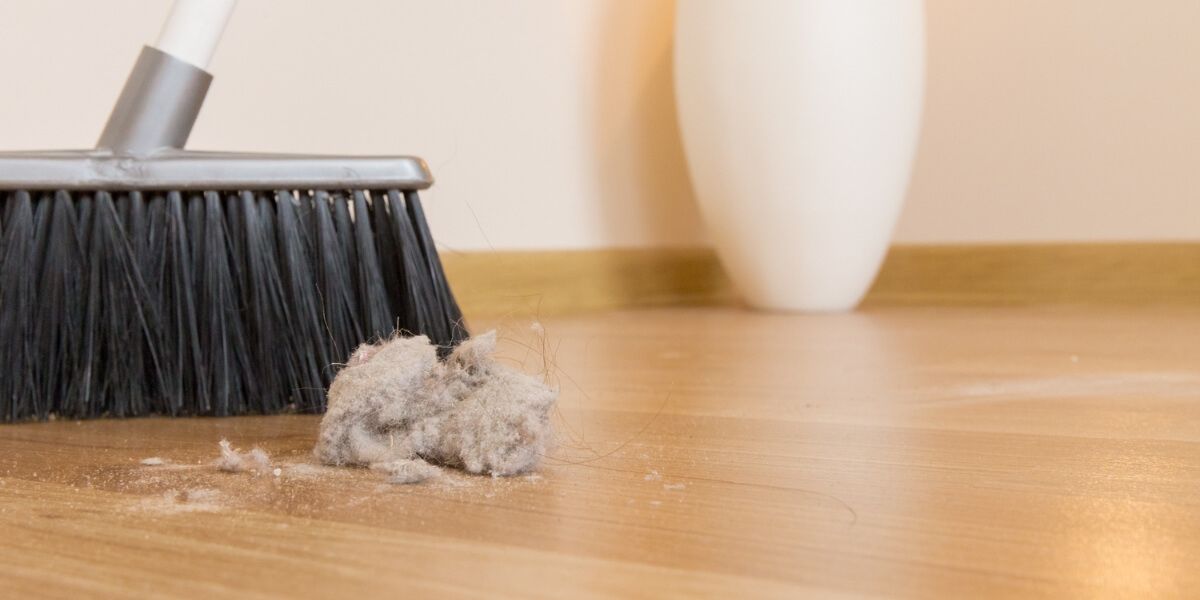
Construction dust keeps coming back because the particles are extremely small and light, so they settle slowly and stay airborne long after the work stops. Fine particles are so small that some can remain suspended for days to weeks, and fine particles known as PM2.5 are about 30 times thinner than a human hair, according to the EPA. Every time you walk through the room or run the air handler, that suspended dust lifts and lands again.
Drywall and joint compound dust is finer and lighter than typical house dust, so a single wipe down captures only what has already fallen. The rest is still in the air, waiting to resettle on the surfaces you just cleaned. That is why one pass never finishes the job and why the dust seems to reappear overnight. Older Fort Worth and Haltom City homes with plaster and lath tend to throw off grittier dust, while newer builds and additions in Southlake, Colleyville, Keller, and Grapevine leave finer drywall dust behind. Both keep resettling the same way.

What is the step-by-step method to get rid of drywall and fine dust for good?
Work top to bottom with damp microfiber, repeat over roughly 24 to 72 hours, and never dry dust or dry sweep. Dry methods relaunch fine particles into the air, while damp cloths and damp mopping trap them. Because drywall joint compound can contain silica, a hazard NIOSH has documented, safety guidance for respirable crystalline silica in construction calls for wet methods and HEPA-filtered vacuums rather than dry sweeping or dry brushing.
A reliable order looks like this:
- Ceilings, fans, and light fixtures first. Dust that sits up high falls onto everything below it, so start at the top with a damp microfiber cloth on an extension pole.
- Walls, trim, and door frames next. Wipe walls, baseboards, crown molding, and door frames with damp microfiber, rinsing often so you capture dust instead of smearing it.
- Countertops, cabinets, and surfaces. Wipe counters, window sills, and window tracks, and clean inside any cabinets and drawers that were open during the work.
- Floors last. If you vacuum, construction-safety and EPA guidance point to a sealed vacuum with a HEPA filter, since a standard vacuum can push ultrafine dust back into the room. Follow with a damp mop.
Then repeat the cycle. Because suspended particles keep landing, plan on two or three passes as the remaining dust settles, which is why the full job usually stretches across 24 to 72 hours rather than a single afternoon.
Standard Clean vs Deep Clean after a remodel: which one do you actually need?
You need a Deep Clean, not a Standard Clean. A Standard Clean maintains an already clean home and is not built to chase ultrafine residual dust off every surface. Post-remodel cleanup requires detail work on baseboards, window tracks, inside cabinets, door frames, and vents, which is the definition of a Deep Clean. Here is how the two compare after a remodel.
| After a remodel | Standard Clean | Deep Clean |
|---|---|---|
| Purpose | Maintain an already clean home | Reset a home after fine dust has settled everywhere |
| Baseboards and trim | Light or spot attention | Wiped in detail with damp microfiber |
| Window tracks and sills | Not a focus | Cleaned out where dust collects |
| Inside cabinets and drawers | Fronts only | Interiors wiped where open during work |
| Door frames and ledges | Not a focus | Detailed top to bottom |
| Vents and registers | Not a focus | Wiped so dust stops recirculating |
| Best for | Weekly or biweekly upkeep | One-time residual remodel dust cleanup |
Post-remodel dust cleanup is handled as an application of the real Deep Clean service, never as debris or trash removal. For what a visit typically costs and what drives the number, see the Fort Worth house cleaning cost guide, then request a free quote for your exact home.

How do you stop remodel dust from recirculating through your HVAC?
Change the HVAC filter and wipe every register and return, because your system pulls fine dust out of the air and blows it back across the room. The EPA says the most effective way to improve indoor air quality is to control the source, then add ventilation and filtration, and it advises changing filters on central heating and cooling systems according to the manufacturer’s directions.
During a remodel, the filter loads up with drywall dust fast, and a clogged filter keeps shedding particles every time the fan runs. Swap it for a fresh one, wipe the supply registers and the cold-air returns, and the room stops re-dusting itself from the inside. Cleaning does more than make a room look tidy, and you can read how the work affects the air you breathe in does house cleaning improve indoor air quality in Fort Worth homes.
Why does safer, low-irritant cleaning matter more after a remodel?
Remodel dust is a common irritant, so the products used to clean it up matter for sensitive households. According to the Asthma and Allergy Foundation of America, dust and particles in the air are common triggers that can set off asthma symptoms, and according to the American College of Allergy, Asthma and Immunology, dust is one of the most common indoor allergens and its symptoms can last year-round. Maid Brigade of Fort Worth uses PUREcleaning products chosen to be safer around kids and pets.
David Michaels, then Assistant Secretary of Labor for Occupational Safety and Health, put it plainly: “Limiting exposure to silica dust is essential. Every year, many exposed workers not only lose their ability to work, but also to breathe.” That is doubly true after a remodel, when fine dust settles into fabrics, vents, and corners. Households already managing symptoms can go deeper in what actually reduces allergy and asthma symptoms in Fort Worth homes. North Texas homes fight seasonal particles too, and the same wet-method approach powers a cedar fever season deep clean when mountain cedar pollen moves in.
Should you clean up remodel dust yourself or hire a pro in Fort Worth or the Mid-Cities?
You can do it yourself if you have time for several passes over a few days, damp microfiber cloths, and a sealed HEPA-filter vacuum. Many Fort Worth homeowners hire a pro because residual dust cleanup is repetitive, detail-heavy work that is best finished in one thorough visit rather than a week of re-dusting. A professional Deep Clean covers the baseboards, window tracks, inside cabinets, door frames, and vents in a single equipped pass.
Maid Brigade of Fort Worth arrives fully equipped, so you buy and store nothing, and its crews are trained, background-checked, and covered by liability and workers’ compensation insurance. The Deep Clean relies on damp-microfiber capture and detail work, which mirrors the wet-method principle public-health agencies describe for fine dust.
How do you book a residual dust Deep Clean in Fort Worth or the Mid-Cities?
Request a free, no-obligation quote and mention that the job is post-remodel residual dust, so it is scoped as a Deep Clean rather than routine upkeep. You can request a free quote online and describe your home, the rooms that were remodeled, and how heavy the dust is. Maid Brigade of Fort Worth is locally owned and family-operated, serving Fort Worth and the Mid-Cities since 1989, and it covers the towns listed on the service areas page. This is fine-dust cleaning, not debris or trash removal.
Fine dust keeps resurfacing for weeks, so request a free, no-obligation quote for a reset once the trades are finished.
Key Takeaways
- Residual remodel dust keeps resettling because fine drywall and joint compound particles are so small and light that they stay airborne and settle slowly for hours after the work stops.
- The reliable method is top to bottom with damp microfiber, ceilings and fans first and floors last, repeated over roughly 24 to 72 hours.
- Dry dusting and dry sweeping relaunch fine particles into the air, so public-health guidance points to damp wet methods and HEPA filtration instead.
- Changing the HVAC filter and wiping registers and returns stops the system from pulling in dust and blowing it back across the room.
- Post-remodel cleanup is a fine-dust Deep Clean, not debris or trash removal, and it covers baseboards, window tracks, inside cabinets, door frames, and vents.
- Maid Brigade of Fort Worth arrives fully equipped with PUREcleaning products chosen to be safer around kids and pets.
FAQ
Why does drywall dust keep coming back no matter how many times I clean?
Drywall and joint compound dust is extremely fine and light, so it stays suspended in the air and settles slowly for hours after you stop cleaning. Each wipe down only captures what has already fallen, while the rest is still airborne and ready to land on the surfaces you just finished. The fix is a repeated top-to-bottom clean with damp microfiber over roughly 24 to 72 hours, not a single pass.
Which specific tasks does a post-remodel Deep Clean include (baseboards, window tracks, inside cabinets, vents)?
A post-remodel Deep Clean is detail work that a Standard Clean does not cover. It includes damp wiping baseboards, trim, and door frames, cleaning out window tracks and sills, wiping inside cabinets and drawers that were open during the work, and wiping vents and registers so dust stops recirculating. It is fine-dust cleaning, not construction debris or trash removal.
Can I just use my regular vacuum and a Swiffer on construction dust?
A dry duster relaunches fine particles into the air instead of capturing them, and a standard vacuum can blow ultrafine dust straight back into the room. Construction-safety and EPA guidance point to damp microfiber, damp mopping, and a sealed vacuum with a HEPA filter for fine dust. Dry sweeping and dry dusting are the methods most likely to make remodel dust reappear.
How many cleaning passes does post-remodel dust actually need, and over how long?
Plan on two or three passes over roughly 24 to 72 hours rather than one clean. Because ultrafine particles stay airborne and keep landing after each pass, surfaces need to be wiped again once the remaining dust settles. Working top to bottom each time, and changing the HVAC filter, keeps you from chasing the same dust in circles.
Are Maid Brigade’s products safe for kids and pets after a remodel?
Maid Brigade of Fort Worth uses PUREcleaning products chosen to be safer around kids and pets. That matters after a remodel because dust and particles in the air are common irritants for sensitive households, according to the Asthma and Allergy Foundation of America. Crews arrive fully equipped, so homeowners buy and store nothing.
Which Fort Worth and Mid-Cities areas do you cover for post-remodel cleaning?
Maid Brigade of Fort Worth serves Fort Worth and the Mid-Cities, including Hurst, Euless, Bedford, Colleyville, North Richland Hills, Keller, Southlake, Grapevine, Watauga, and Haltom City. Residual remodel dust cleanup is handled as a Deep Clean in any of these areas. Request a free, no-obligation quote and mention that the job is post-remodel.
Sources
- Maid Brigade of Fort Worth: Deep Clean service
- Maid Brigade of Fort Worth: request a free quote
- Maid Brigade of Fort Worth: service areas
- Maid Brigade of Fort Worth: house cleaning cost guide
- EPA: What is Particle Pollution?
- EPA: Particulate Matter (PM) Basics
- EPA: Improving Indoor Air Quality
- EPA: Indoor Particulate Matter
- CPWR Silica Safe: Housekeeping controls for respirable crystalline silica
- Safety Online: Drywall Workers Alerted to Dangers of Dust (NIOSH study)
- AAFA: Asthma Triggers and Causes
- ACAAI: Dust Allergy
- U.S. Department of Labor / OSHA: final rule on respirable crystalline silica (David Michaels)