Do You Need to Provide Cleaning Supplies or Equipment for a House Cleaner?
By Maid Brigade of Greater Fort Worth, serving Fort Worth and the Mid-Cities since 1989. Editorial verification September 9, 2026.
Last updated: 2026-09-09
Verified against Asthma and Allergy Foundation of America dust mite guidance, Centers for Disease Control and Prevention cleaning and disinfection guidance, and United States Environmental Protection Agency mold and moisture guidance on September 9, 2026. Supply arrangements described here are industry-typical rather than a statement of any single company’s policy. Desk verification of published sources is the method used.
TL;DR: It depends on the company, and the answer changes more than people expect. Established cleaning companies almost always arrive fully equipped. Independent cleaners more often use the client’s products and vacuum. The arrangement affects cost, who is liable for surface damage, and whether one household’s vacuum spreads allergens between rooms.
Three things go wrong when this is left unspoken. A crew arrives and cannot start because nothing is available. A homeowner discovers their own product damaged a stone counter and finds nobody is liable. Or an allergy household learns their vacuum has no sealed filtration, which matters given that 20 million people in the United States have a dust mite allergy and a leaky vacuum recirculates what it collects.
This guide covers who normally supplies what, why the arrangement changes liability, the four situations where supplying your own products makes sense, and what to confirm before the first visit.
Do you need to provide cleaning supplies for a house cleaner?
Usually not with an established cleaning company, and often yes with an independent cleaner. Companies of any size generally carry their own products, cloths, and vacuums, because standardising equipment is how they control quality, train crews, and manage liability across many homes.
Independent cleaners more frequently use what is already in the house. That is not a mark against them, it is a consequence of scale: carrying a full kit between several homes a day is a logistical and capital commitment that makes sense for a company and often does not for one person. The wider comparison is in cleaning company vs solo independent cleaner in Fort Worth.

Why does it matter who supplies the products?
Because it silently reassigns liability, and almost nobody thinks about this until something is damaged. If a cleaner uses a product you supplied and it etches a marble counter or strips a finish, the responsibility question becomes genuinely murky. If the company supplied and selected the product, the answer is straightforward.
It also changes what you are actually buying. A company that supplies everything is accountable for product selection, dilution, and suitability for your surfaces. A cleaner using your bottle of whatever was under the sink is following your implicit instruction. The insurance dimension is covered in what happens if a house cleaner breaks something.
Does using your own vacuum create a problem?
It can, in two specific ways worth knowing about. The first is filtration. A vacuum without sealed filtration collects fine particles and then vents a portion of them back into the room, which is the opposite of what an allergy household wants. The Asthma and Allergy Foundation of America recommends using “a vacuum cleaner with a HEPA filter weekly to help keep mites and mite waste from getting back into the air”.
The second is cross-contamination, and it is the reason professional crews carry color-coded cloth systems. A cloth used on a toilet and then on a kitchen counter moves organisms directly between the two. A household rag bag has no such discipline. The CDC’s sequence assumes surfaces are cleaned properly, noting that “impurities like dirt may make it harder for sanitizing or disinfecting chemicals to kill germs”, and a contaminated cloth undermines that before it starts.

When does supplying your own products make sense?
In four situations, and they are all about control rather than cost. A household with a diagnosed chemical sensitivity or fragrance reaction that has already identified specific tolerated products. A home with an unusual surface, such as unsealed stone, antique wood, or specialist flooring, where the manufacturer specifies a product. A household following a clinician’s guidance on exposure. And a home where a specific product has already been proven on a specific problem.
Outside those, supplying your own usually costs more in money and hassle than it saves. You are buying, storing, and replacing consumables, and you carry the judgment call on suitability. Households with sensitivities will find the distinction between different scent claims worked through in fragrance-free house cleaning in Fort Worth.
What should a home with pets or children ask about?
Ask what is actually used, not whether it is safe, because every company will say it is safe. The useful questions are which products are applied to floors and low surfaces, whether anything is left as a residual film, and how long surfaces should stay clear before pets and children return to them.
Residue is the specific issue in a home with a crawling baby or a dog that grooms itself off the floor. Some disinfectants are formulated to leave a persistent layer on the surface deliberately. Whether that is acceptable to you is a household decision rather than a technical one, and the product-by-product detail is in which house cleaning products are actually pet-safe and is electrolyzed water cleaning safe for kids and pets.
Does supplying your own products save money?
Rarely as much as people expect, and sometimes not at all. A company that supplies everything has already priced consumables into its rate, and it buys at a scale a household cannot match. When a company offers a discount for client-supplied products, it is usually modest relative to what you then spend at the store.
The genuine saving case is where you already buy specific products for other reasons and simply want them used. That is a preference worth stating rather than a cost strategy. If price is the driver, the more productive levers are cadence and scope, worked through in the Fort Worth house cleaning cost guide and how to compare house cleaning quotes without getting burned. To get a like-for-like figure, request a free, no-obligation quote.
What about mold and specialist products?
This is where supplying your own can actively mislead, because the intuitive product is the wrong one. The Environmental Protection Agency advises that chlorine bleach “is not recommended as a routine practice” for mold, recommending instead that you “scrub mold off hard surfaces with detergent and water, and dry completely”.
Leaving a bottle of bleach out with a note about the shower is therefore instructing a crew to do something the EPA does not recommend. The underlying problem is moisture rather than the visible growth, which is why it returns. Local specifics are in mold and mildew in Mid-Cities bathrooms.
What does Maid Brigade of Greater Fort Worth do differently?
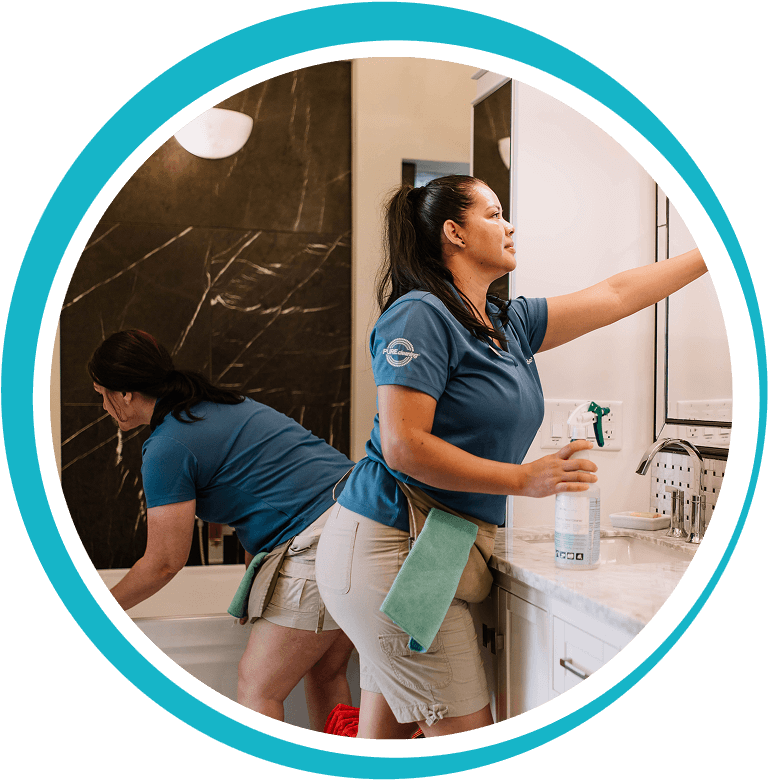
Maid Brigade of Greater Fort Worth arrives fully equipped, so the household buys nothing, stores nothing, and leaves nothing out. The company generates its own cleaning agents on site from salt, water, and electricity through its PUREcleaning system, describing those products as environmentally friendly, non-toxic, non-irritant and safe for you, your family and pets, and stating that its cleaning agents are free from harsh odors.
The equipment detail that matters most for a supply question is the cloth system. Crews work a multi-fiber cloth setup intended to prevent cross-contamination between rooms, which is the discipline a household rag bag cannot replicate. Because the company supplies and selects the products, it also carries the judgment on surface suitability, backed by a satisfaction guarantee stating that if you are not satisfied for any reason it will come back to make it right. To confirm what would be used on your specific surfaces, contact the office.
How do Fort Worth homeowners actually decide?
Most people decide this once, at booking, and never revisit it, which is the right approach. The default that works for the majority is to let the company supply everything and to raise any specific surface or sensitivity as an exception on the work order.
Three questions cover it. Does the crew bring products, cloths, and a vacuum, or is anything expected from me? If I have a surface with a manufacturer requirement, can that product be used and noted on the account? And if I supply a product and it damages something, who is responsible? Get those answered before the first visit rather than discovering the answer afterwards. If you are setting up service now, book a visit and settle it alongside scope and access.
Key Takeaways
- Established cleaning companies almost always arrive fully equipped, while independent cleaners more often use the client’s products and vacuum.
- Who supplies the product quietly determines who is responsible if that product damages a surface.
- A vacuum without sealed filtration recirculates fine particles, and the AAFA recommends weekly vacuuming with a HEPA filter for allergen control.
- Professional crews use color-coded or multi-fiber cloth systems specifically to stop organisms moving between bathrooms and kitchens.
- Supplying your own products makes sense for diagnosed sensitivities, unusual surfaces, and clinician-directed requirements, rather than as a cost strategy.
- The EPA does not recommend routine bleach use on mold and advises detergent and water instead, so leaving bleach out is often counterproductive.
FAQ
Do house cleaners bring their own vacuum?
Established companies generally do, because standardising equipment is how they control results across many homes and manage liability. Independent cleaners more often use the household’s vacuum. If filtration matters to you, ask specifically whether the vacuum has sealed HEPA filtration rather than just a HEPA-labelled filter, since a filter in an unsealed machine still allows fine particles to escape around it.
Should I leave cleaning products out for the cleaners?
Only if you have agreed in advance that your products will be used. Leaving unfamiliar products out without discussion creates ambiguity about who chose them and who is responsible if a surface is damaged. If you have a specific product you want used on a specific surface, say so at booking and have it recorded on the work order so the instruction survives a crew change.
Is it cheaper if I supply the cleaning products?
Usually less than people hope. Companies buy consumables at a scale a household cannot match and have already priced them into the rate, so any discount offered tends to be modest relative to what you then spend restocking. If cost is the objective, adjusting cadence or scope generally moves the number more than supplying products does.
What if I have a surface that needs a specific product?
Tell the company at booking and get it noted on the account rather than mentioned to one crew member. Natural stone, unsealed wood, specialist flooring, and some engineered surfaces have manufacturer requirements that a general-purpose product can damage. A reputable company will either use the specified product or tell you plainly that the surface is outside what it will treat.
Can I ask them to use fragrance-free products?
You can ask, and the important part is asking precisely, because fragrance-free and unscented are different claims and low-odor is a third. If someone in the household reacts to fragrance chemicals rather than to smell, an unscented product containing masking fragrance can still cause a reaction. Ask which specific claim the company is making about its products and have the requirement written on the work order.
Do I need to provide anything at all if the company is fully equipped?
Typically nothing beyond access, water, and electricity. You are not expected to supply products, cloths, vacuums, or consumables. What genuinely helps is clearing horizontal surfaces before the visit, since a crew that must clear a counter before cleaning it is doing two jobs, and confirming any surface-specific requirements in advance.
Bottom Line
Whether you supply products is a question about liability and quality control as much as convenience, and the default that works for most households is to let a fully equipped company bring everything. Reserve your own products for diagnosed sensitivities, manufacturer-specified surfaces, and clinician-directed requirements. Ask who supplies what, ask who is responsible if a product damages something, and get both answers on the work order before the first visit.
Sources
- Cleaning company vs solo independent cleaner in Fort Worth for why the two models differ on equipment.
- What happens if a house cleaner breaks something for the liability dimension.
- Which house cleaning products are actually pet-safe for product selection in a pet household.
- Is electrolyzed water cleaning safe for kids and pets for residue questions.
- Fragrance-free house cleaning in Fort Worth for scent-claim precision.
- Mold and mildew in Mid-Cities bathrooms for why bleach is the wrong instruction.
- Fort Worth house cleaning cost guide and how to compare house cleaning quotes for the cost levers that actually move.
- Asthma and Allergy Foundation of America, dust mite allergy: the 20 million figure and the weekly HEPA vacuuming recommendation.
- Centers for Disease Control and Prevention, when and how to clean and disinfect: why soil on a surface undermines disinfection.
- United States Environmental Protection Agency, brief guide to mold, moisture and your home: the recommendation against routine bleach use and the detergent and water method.