
How to Verify a Cleaning Company's Bond and Insurance Actually Cover Your Home

By Maid Brigade of Greater Fort Worth, serving Fort Worth and the Mid-Cities since 1989. Editorial verification September 10, 2026.
Last updated: 2026-09-10
Verified against the Better Business Bureau, the Insurance Information Institute, and the New York Department of Financial Services on September 10, 2026. Every external link in this guide was checked live during that review and the cited pages re-read where they permit automated access; dead citations found in that sweep were replaced or removed. Desk verification of published sources is the method used, and no laboratory or in-home testing was performed for this guide.
TL;DR: Do not take “bonded and insured” at face value. Ask any cleaning company for a current certificate of insurance in writing, confirm it lists general liability and workers’ compensation with active dates, and understand that a bond covers theft while insurance covers damage and injury. Maid Brigade of Greater Fort Worth carries liability and workers’ compensation insurance, background-checks every crew member, and provides proof on request.
Nearly every cleaning company in the Fort Worth area writes “bonded and insured” somewhere on its website, but almost none explain how a homeowner is supposed to confirm that is true rather than a marketing line. This guide walks through the exact documents to ask for, what a real certificate of insurance looks like, and the questions that separate a company with real protection behind it from one hoping you never ask.
How do you verify a cleaning company is actually bonded and insured?
Ask the company to send a current certificate of insurance (COI) in writing, then confirm the policy is still active before the first visit. A legitimate company provides this without hesitation, often within the same conversation, because the document already exists in their insurance file. A company that stalls, changes the subject, or offers a discount instead of the paperwork has already answered the question.
The Better Business Bureau’s hiring guidance puts it plainly: “Any individual or business that is considered for hire should be registered, bonded and insured.” The same guidance recommends requesting that employees working in your home have passed a background check, since a company that skips one protection often skips the other.

What is a certificate of insurance, and what should it show?
A certificate of insurance is a document an insurer or broker issues to summarize a policy’s active coverage, including the types of coverage, the limits, and the effective and expiration dates. Under New York’s insurance law, cited by the state’s Department of Financial Services, a certificate is defined as evidence of coverage, not the policy itself, and it “cannot amend, extend, or alter the coverage provided by the insurance policy to which the certificate of insurance refers.”
That distinction matters for a homeowner. A real COI should name the cleaning company as the insured, list general liability coverage with a dollar limit, list workers’ compensation if the company carries it, and show dates that have not lapsed. A screenshot, a verbal promise, or a certificate with no dates is not proof of anything currently in force. The extra phone call to confirm active coverage is worth making: about 5.3 percent of insured U.S. homes, roughly 1 in 18, filed a homeowners insurance claim in 2023, according to the Insurance Information Institute, and a cleaning visit gone wrong is exactly the kind of incident that can turn into one. If a homeowner wants extra confidence, calling the insurance carrier listed on the certificate to confirm the policy is still active is a reasonable next step, the same verification step commercial clients use before hiring contractors.
What is the difference between bonded and insured, and why do you need both?
Bonded and insured protect against two different failures, and a company can carry one without the other. A surety bond is a financial guarantee against theft or dishonest acts by an employee, while liability insurance pays for accidental property damage or injury during a clean. The Insurance Information Institute describes a commercial general liability policy as protection “from financial loss if you are liable for property damage, bodily injury, or personal and advertising injury caused by your services, business operations, or employees.” That protection carries real weight: liability claims on homeowners policies averaged $29,880 from 2019 through 2023, according to the Insurance Information Institute, a measure of how large a single property-damage or injury claim can run. A cleaning company’s own liability insurance exists to absorb that kind of loss instead of leaving it on the homeowner.
A deeper breakdown of what each one actually pays for, including a side-by-side comparison, lives in the guide to what happens if a house cleaner breaks something. The short version: ask for proof of both, because a bond will not cover a broken television and insurance will not cover a stolen ring.
What questions confirm coverage is real and current before you hire?
Four questions, asked before booking, confirm whether a company’s coverage is real rather than assumed. Ask for a current certificate of insurance in writing, ask whether the company carries its own workers’ compensation policy, ask whether cleaners are direct employees or subcontractors, and ask what happens step by step if something is damaged during a visit.
The employee-versus-subcontractor question matters because insurance and liability can work differently depending on how a worker is classified, an issue general liability and workers’ compensation authorities flag for homeowners to raise directly with any company rather than assume. In Texas specifically, the stakes are higher than many homeowners realize: the Texas Department of Insurance confirms that “private employers can choose to carry workers’ compensation insurance coverage, but it is not required in most cases.” That option gets used often: about 25 percent of Texas private-sector employers carried no workers’ compensation coverage at all in 2022, according to the Texas Department of Insurance, one in four employers statewide. No state agency checks this for you before a crew walks into your Fort Worth or Mid-Cities home, which is why asking directly is the only way to know.
If a worker is hurt in a home with no workers’ compensation behind the company, responsibility for that injury can land somewhere unexpected. “There’s a good chance these workers will be covered by your homeowners or renters policy, but each company treats things a little differently,” says Randy Petro, vice president of claims for Mercury Insurance, in insurance.com’s guide to hiring household help. That uncertainty is exactly why confirming a company’s own workers’ compensation coverage protects the homeowner, not just the cleaner.
How does Maid Brigade handle proof of coverage?
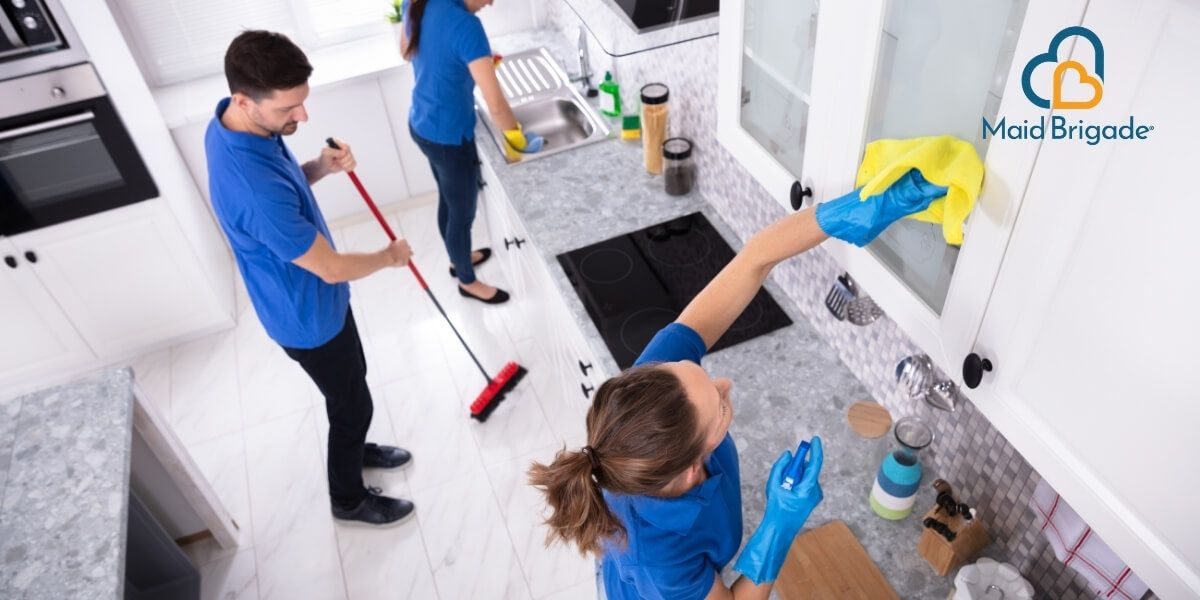
Every Maid Brigade of Greater Fort Worth crew is background-checked and covered by liability and workers’ compensation insurance, and the company provides proof on request rather than treating the question as an inconvenience. That standard applies whether a home books a standard clean, a deep clean, or a move clean through the Maid Brigade services page.
Coverage is one factor among several worth comparing when a homeowner is weighing quotes side by side, alongside price and what is actually included in each visit; the guide to comparing house cleaning quotes without getting burned by the lowest bid walks through that full comparison. To ask directly about proof of coverage for a specific home, request a free, no-obligation quote and put the question to the team before the first visit is scheduled.
Ask for the certificate before the first visit rather than after an incident: contact the office to request proof in writing.

Key Takeaways
- Ask any cleaning company for a current certificate of insurance in writing before the first visit, not just a verbal claim of “bonded and insured.”
- A real certificate of insurance names the company as the insured and lists general liability coverage, workers’ compensation if carried, and dates that have not lapsed.
- A surety bond and liability insurance cover different failures: the bond covers theft and dishonesty, insurance covers accidental damage and injury.
- Texas does not require most private employers to carry workers’ compensation, and about 25 percent carried none at all in 2022 according to the Texas Department of Insurance, so verifying it is the homeowner’s job, not a state guarantee.
- A company that stalls, dodges, or offers a discount instead of proof of coverage is a warning sign worth taking seriously.
- Maid Brigade of Greater Fort Worth carries liability and workers’ compensation insurance, background-checks every crew member, and provides proof on request.
FAQ
Can I ask for proof of insurance before booking a house cleaner?
Yes, and a reputable company expects the question. Request a current certificate of insurance in writing, and confirm it lists general liability coverage with active dates before the first visit is scheduled. There is no reason a legitimate cleaning company would hesitate to provide this.
What should I do if a cleaning company refuses to provide proof of insurance?
Treat it as a decisive answer and consider hiring elsewhere. A company with active coverage already has the certificate of insurance on file and can send it without delay; stalling, vague reassurances, or a lower price offered instead of documentation are signs the coverage may not exist or may not be current.
Does homeowners insurance cover an injury to a hired cleaner?
It depends on the company’s own coverage, and homeowners should not assume it is automatic. According to Randy Petro, vice president of claims for Mercury Insurance, in insurance.com’s guide to hiring household help, coverage for a hired worker’s injury varies by homeowners policy and by how the worker is classified, which is exactly why confirming a cleaning company’s own workers’ compensation coverage matters before booking.
What is workers’ compensation, and why does it protect me as a homeowner?
Workers’ compensation is insurance a company carries to cover its own employees if they are injured on the job, including while cleaning a client’s home. The Texas Department of Insurance confirms that Texas does not require most private employers to carry it, so a homeowner who hires an uninsured cleaner can face more exposure than expected if that worker is hurt during the visit.
Is a bond the same thing as insurance?
No. A surety bond is a financial guarantee against theft or dishonest acts by an employee, while liability insurance pays for accidental property damage or injury caused during a clean, as the Insurance Information Institute describes for general liability coverage. A trustworthy cleaning company carries both, and a homeowner should ask for proof of each separately.
Sources
- Maid Brigade of Greater Fort Worth: cleaning services
- Maid Brigade of Greater Fort Worth: request a free quote
- What happens if a house cleaner breaks something? Bonded vs insured explained
- How to compare house cleaning quotes in Fort Worth without getting burned by the lowest bid
- Better Business Bureau: 7 tips for hiring a house cleaning service
- Insurance Information Institute: Commercial general liability insurance
- Insurance Information Institute: Facts + statistics, homeowners and renters insurance
- New York Department of Financial Services: Certificates of insurance
- Texas Department of Insurance: Workers’ compensation employer resources
- Texas Department of Insurance: 2022 nonsubscriber employer survey
- Insurance.com: Should hired household help be bonded and insured?