Do You Have to Be Home When the Cleaners Come?
By Maid Brigade of Greater Fort Worth, serving Fort Worth and the Mid-Cities since 1989. Editorial verification September 10, 2026.
Last updated: 2026-09-10
Verified against the Better Business Bureau and the Asthma and Allergy Foundation of America on September 10, 2026. Every external link in this guide was checked live during that review and the cited pages re-read where they permit automated access; dead citations found in that sweep were replaced or removed. Desk verification of published sources is the method used, and no laboratory or in-home testing was performed for this guide.
TL;DR: No, you do not have to be home when the cleaners come. Most recurring clients in Fort Worth and the Mid-Cities are at work during the visit and arrange secure entry in advance. Being home for the first cleaning is worth it to walk through your priorities, but after that most households hand over access and come back to a finished home.
Two worries usually arrive together. The first is logistical: if you have to take a half day off work every time the house gets cleaned, the whole point of hiring help evaporates. The second is quieter and harder to say out loud, which is that letting people into an empty house feels different from letting them in while you are standing there. Both are reasonable, and both have concrete answers rather than reassurance. The useful starting point is a distinction most homeowners never get told. The Better Business Bureau separates two protections people assume are one: a bond covers dishonest or criminal acts by the people cleaning your home, while insurance covers accidental damage, such as a faucet left running or a lost key. A company can carry one without the other, which turns a vague worry into a specific question you can ask before anyone gets a key.
Do you have to be home when the cleaners come?
No. Most recurring cleaning clients are not home during the visit. The standard arrangement across Fort Worth and the Mid-Cities is that the homeowner sets up secure entry once, at the start of service, and then goes to work as normal on cleaning day. Nothing about a professional cleaning requires your presence, and many households find crews work faster and more thoroughly in an empty home.
That said, being present is a genuine choice rather than a failure. Some people prefer to be there, particularly early on or in a home with anxious pets. The point is that it should be a preference, not a requirement that reshapes your week.

Is it safe to leave a cleaning crew alone in your home?
It is, provided you hired on the right basis. Safety here is not about supervision during the visit, because watching someone clean does not verify anything meaningful. It comes from vetting before the first visit: confirming the company is insured, that the specific people entering have been background-checked, and that there is a real business standing behind the work.
The Better Business Bureau recommends that anyone hired to clean your home should be registered, bonded and insured, and that homeowners request background checks on the employees who will work in the home. It draws a distinction worth knowing: a bond protects you from dishonest or criminal acts by the people cleaning your home, while insurance protects you if the cleaning people cause an accident, such as forgetting to shut off a faucet or losing a key. The BBB also advises obtaining the name of the company’s insurance agent and calling to confirm the policies are in effect, noting the dollar values and coverage limits.
Do that verification once, before the first visit, and the question of whether to be home stops being a safety question and becomes a scheduling preference. What to ask before hiring a house cleaning company covers the full checklist.
Should you be home for the first cleaning even if not after?
Yes, if you can manage it. The first visit is the one where being present pays for itself. It lets you walk the home with the crew, point out the surfaces you care about, flag anything delicate, and confirm what is and is not in scope before work begins. That ten-minute conversation prevents most of what people later describe as a company that stopped doing a good job, which is usually a scope misunderstanding nobody corrected.
After the first visit, the value of being home drops sharply. Preferences are recorded, the crew knows the house, and your presence adds nothing the work needs. Most households in Fort Worth attend the first cleaning and then never attend another. What to expect at your first house cleaning and how to prepare covers what that visit actually looks like.
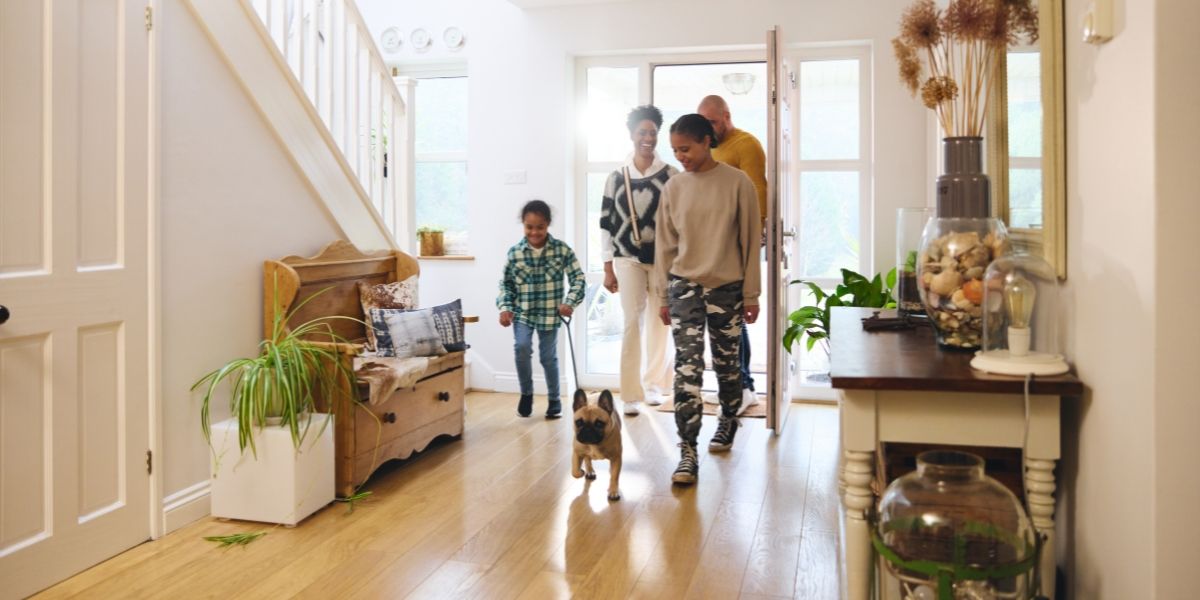
What are the pros and cons of being home versus being away?
Being away generally produces a faster, more thorough clean. Being home gives you real-time control and suits households with specific concerns. Neither is wrong, and plenty of people switch after trying both.
| Factor | Being home | Being away |
|---|---|---|
| Cleaning speed | Slower, since crews work around you and occupied rooms | Faster, with full access to every room at once |
| Thoroughness | Some areas get skipped or rushed if you are using them | Crews complete the full scope without interruption |
| Communication | Immediate, questions answered on the spot | Handled through notes and the office beforehand |
| Pets | You can manage a nervous animal directly | Requires a plan: crate, one closed room, or day care |
| Privacy | No strangers alone in the home | Requires secure entry and a vetted company |
| Your day | Half a day at home, often working around the crew | Uninterrupted, come back to a finished home |
How do cleaners get in if you are not home?
Entry is arranged in advance through one of a few standard methods: a lockbox with a key, a keypad or smart lock code, a garage code, or a key left with the office. Each has different security properties, and smart locks have become the common recommendation because access can be granted and revoked without physically handing anything over.
Rebecca Edwards, a safety expert at SafeWise, recommends “giving your spare key to a neighbor or friend or using a smart lock with a code” rather than hiding one outside, because “smart locks are particularly secure because they expire and can be changed, and you won’t risk losing your house key.” A code that works only on Thursday mornings and can be revoked in seconds is a materially different thing from a key under a flowerpot.
This post covers whether you need to be present. The mechanics of each entry method, including lockbox placement, code hygiene, and smart lock setup, are covered in detail in how to give house cleaners access to your home safely.
What should you do with pets before a cleaning visit?
Have a plan and tell the company in advance. Dogs that are fine with visitors when you are present can behave differently in an empty house, and crews move between rooms with equipment and open doors repeatedly, which is how animals get out. The workable options are a crate, one closed room with a note on the door, a yard if it is genuinely secure, or day care for anxious animals.
Cats generally need less management but should still be flagged, particularly indoor-only cats near exterior doors. Tell the office at booking rather than leaving a note on the day, so the instruction is on the work order every visit rather than depending on who reads what. Households with pets also tend to need a tighter cleaning cadence, since the Asthma and Allergy Foundation of America reports that six out of 10 people in the United States are exposed to cat or dog dander and recommends vacuuming once or twice a week where pets are present.
What should you do with valuables and alarm codes?
Put valuables away and give the alarm system a dedicated code. The Better Business Bureau advises securing personal items such as jewelry and documents with private information before any in-home service. That is not an accusation against a cleaning company. It removes ambiguity for everyone, and it means an item you misplaced yourself never becomes an awkward conversation.
For alarms, the right approach is a separate code for the service rather than sharing your primary one. A dedicated code can be issued, monitored, and revoked without changing anything else in your household, and most modern panels log which code was used and when. If your system does not support multiple codes, a temporary code that expires is the next best option. Set both the entry method and the alarm arrangement when you request a free quote, so it is part of the work order from the first visit rather than an improvisation on the day.
What does Maid Brigade of Fort Worth do when you are not home?
Maid Brigade of Greater Fort Worth works from an agreed access arrangement recorded before the first visit, so the crew is not improvising entry on the day. The company states that all of its cleaning professionals are thoroughly trained and undergo comprehensive criminal background checks before being hired, and that it provides liability and workers’ compensation insurance. Crews arrive fully equipped, so nobody needs access to your supplies or storage.
What the crew uses while you are out is worth knowing, since you are not there to see it. The company describes its PUREcleaning service and products as environmentally friendly, non-toxic, non-irritant and safe for you, your family and pets. Its cleaning agents are made on site from salt, water, and electricity, producing hypochlorous acid for light cleaning and disinfection and sodium hydroxide for general-purpose cleaning, and the company states they are made in house, refreshed daily, and free from harsh odors. Coming home to a clean house that does not smell strongly of anything is part of why most clients stop attending after the first visit. Maid Brigade has served the Fort Worth and Mid-Cities area since 1989 and backs its work with a 100% Satisfaction Guarantee, returning to make it right if you are not satisfied.
How do Fort Worth homeowners actually handle access?
The common pattern across Fort Worth, Hurst, Bedford, Colleyville, Keller, and Southlake is straightforward: attend the first cleaning, set up a keypad or smart lock code afterward, and never think about it again. Households with dogs add a crate or a closed room to the routine. Households with alarm systems add a dedicated service code.
Two local habits are worth copying. The first is putting the cleaning day on the same weekday every cycle, which makes pet arrangements and code scheduling automatic rather than a weekly decision. The second is a short written note in the work order covering pets, no-go rooms, and any surface with a special instruction, kept with the office rather than on the counter, so it survives crew changes. Consistency of crew helps here too, and whether Maid Brigade sends the same cleaning team every time covers how that works in practice. If you are setting up ongoing service, recurring cleaning is where the schedule and access details get locked in together.
To set entry, pets, and alarm details before a first visit rather than on the day, request a free quote and ask for them on the work order.
To set entry up once and stop thinking about it, contact the office before the first visit.
Key Takeaways
- You do not need to be home when the cleaners come, and most recurring clients in Fort Worth and the Mid-Cities are at work during the visit.
- Safety comes from vetting before the first visit rather than supervision during it, since watching someone clean verifies nothing that matters.
- The Better Business Bureau distinguishes bonding, which covers dishonest acts, from insurance, which covers accidental damage, and advises calling the insurance agent to confirm coverage is in force.
- Being home for the first cleaning is worth it, because the walkthrough conversation prevents most later disagreements about scope.
- Smart lock codes are preferred over hidden keys because they can be scheduled, revoked, and changed without handing over anything physical.
- Pets, valuables, and alarm codes each need a decision made once and recorded on the work order, not improvised on the day of each visit.
FAQ
Can I leave and let the cleaners lock up?
Yes, and this is the standard arrangement for recurring service. The company locks up according to whatever entry method you set at booking, whether that is returning a key to a lockbox, closing a smart lock, or securing a garage entry. Confirm the lock-up procedure explicitly during your first visit so both sides know what happens at the end of each cleaning, and make sure it is recorded on the work order rather than agreed verbally with one crew member.
Do I need to be home the first time the cleaners come?
You do not have to be, but it is worth arranging if you can. The first visit is when preferences get set, delicate surfaces get flagged, and the scope of work gets confirmed in person. Ten minutes walking the house with the crew lead prevents most of the misunderstandings that later feel like declining service quality. After that first visit, the practical value of being home drops sharply and most households stop attending.
What should I do with my dog during a house cleaning?
Make a plan in advance and put it on the work order rather than leaving a note on the day. The workable options are a crate, one closed room with a sign on the door, a genuinely secure yard, or day care for anxious animals. The real risk is not aggression but escape, since crews move between rooms with equipment and open exterior doors more than a normal visitor would. Telling the office at booking means the instruction survives any crew change.
Should I hide my valuables before the cleaners arrive?
The Better Business Bureau recommends securing personal items such as jewelry and documents containing private information before any in-home service. This is standard practice with any trade or service in your home and is not a judgment about a particular company. Putting valuables away removes ambiguity for everyone, and it means that if you later misplace something yourself, it never turns into an uncomfortable conversation with a crew you otherwise trust.
How do I give the cleaners my alarm code safely?
Create a separate code for the cleaning service rather than sharing your primary household code. A dedicated code can be monitored, changed, or revoked without disrupting anything else, and most modern alarm panels record which code was used and at what time. If your system only supports one code, look at whether it offers temporary or scheduled codes. Set this up when you book so it is part of the standing arrangement instead of a last-minute text message.
Is it faster if I am not home during the cleaning?
Generally yes. Crews with full access to every room can work through the house in a single pass rather than moving around occupied spaces and returning to rooms later. Homeowners who stay home often find rooms they were using get a lighter clean, simply because the crew worked around them. This is the main practical reason most recurring clients settle on being away, independent of any convenience benefit to their own schedule.
Maid Brigade of Greater Fort Worth verified the vetting, bonding, insurance, and valuables guidance in this guide against the Better Business Bureau, and the pet dander exposure figure against the Asthma and Allergy Foundation of America on August 24, 2026, and confirmed the quotation from Rebecca Edwards of SafeWise at the source where it appears. Company details reflect Maid Brigade of Greater Fort Worth’s published descriptions as of that date.
Sources
- How to give house cleaners access to your home safely for the mechanics of keys, lockboxes, codes, and smart locks.
- What to ask before hiring a house cleaning company in Fort Worth for the vetting checklist to run before the first visit.
- What to expect at your first house cleaning and how to prepare for what the first visit involves.
- Does Maid Brigade send the same cleaning team every time? for crew consistency and why it matters to access arrangements.
- Better Business Bureau, tips for hiring a house cleaning service: bonding versus insurance, verifying coverage with the agent, background checks, and securing valuables.
- SafeWise via HuffPost: the quotation from Rebecca Edwards on smart locks, expiring codes, and hidden spare keys.
- Asthma and Allergy Foundation of America, Control Indoor Allergens: pet dander exposure rates and vacuuming frequency guidance.